Roseville Family Credits American Red Cross Home Fire Campaign After Safely Evacuating Blaze

By Peg Taylor, Red Cross Volunteer

Paula Metz and her family know firsthand the value of the American Red Cross Home Fire Campaign.

Their Roseville, Calif. home caught fire in August, 2021.
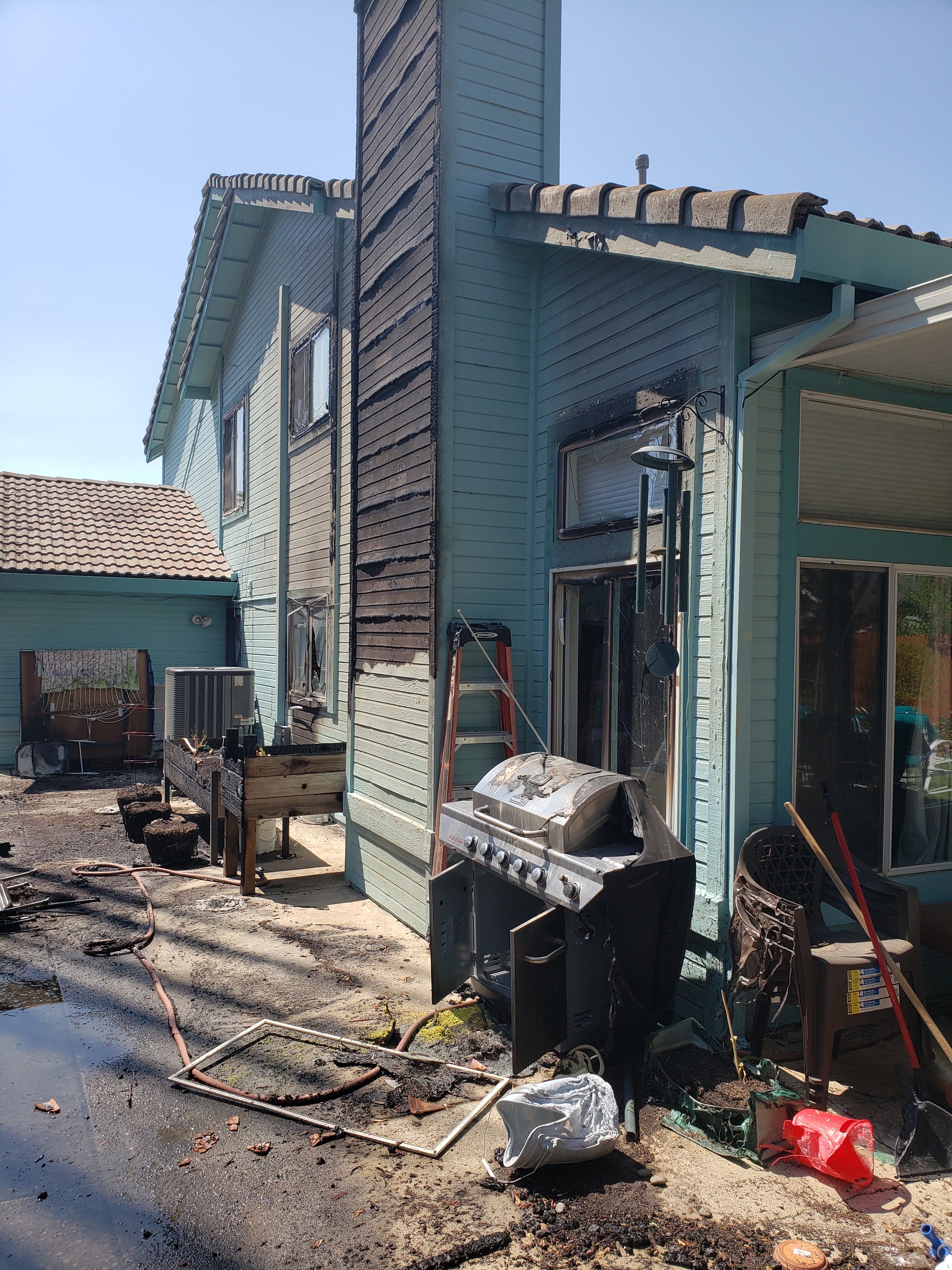
When the fire happened, the family of five, including one person who uses a walker, had to evacuate. They were able to respond quickly and evacuate safely due to the knowledge and evacuation planning provided them by the Red Cross.

“The fire happened so quickly. Having the Red Cross training was helpful. I felt a sense of readiness,” said Metz.

“Before, I wouldn’t have thought about my cars, full of gasoline, as being accelerants. One of the first things we did when we got out was to get our cars out of the driveway and away from the house. I’m now more aware of these things.”

“A month prior to the fire, the Red Cross did a telephone interview to educate us on fire preparedness, how to prepare an evacuation plan, how to use fire extinguishers, how to make sure our smoke alarms were working,” said Metz. “They also sent a package of information for me to read.”

Home fires are the most frequent and deadliest disaster in the United States. Every 24 seconds, a fire department in the U.S. responds to a fire somewhere in the nation, according to the National Fire Protection Association. On average seven people die each day from these fires and 36 people are injured.

When a home fire happens, those inside often have less than two minutes to get out safely.

To reduce the high number of home fire fatalities and injuries, the Red Cross launched the Home Fire Campaign in 2014. The program educates people about home fire safety, helps them create customized evacuation plans, and provides installation of free smoke alarms in neighborhoods at high risk for home fires.

So far, more than 1,200 lives have been saved in the U.S. as a direct result of the Home Fire Campaign. Seven of those, including the Metz family, live in the California Gold Country Region of the Red Cross.

Paula and her family are thankful they took the time to participate virtually in the Red Cross Home Fire Campaign. “I hope others check out Red Cross’ fire preparedness information,” she said.

For more information on the Red Cross’ Home Fire Campaign, to donate to the Red Cross, or to join thousands of volunteers across the country who come to the aid of people impacted by home fires, visit redcross.org.

Local Cancer Survivor Encourages Blood Donations as Shortage Continues Nationwide

By Rita Blomster, Communications Volunteer

As the American Red Cross reports its lowest blood supply in a decade, one cancer survivor’s story illustrates the critical importance of blood donations.   

Brittany DeNorscio was diagnosed with leukemia in 2017.  Last month, she told ABC10 in Sacramento that she was thankful for the many anonymous donors who saved her life as she went through chemotherapy, bone marrow transplants and countless blood transfusions. 

Now in remission, DeNorscio wants others to become blood donors.   

“You could be, you know, walking down the street and pass somebody you don’t even know that you saved their life just by donating blood,” she told ABC10.  

Dr. Sarah Barnhard, UC Davis Health Center’s Director of Transfusion Medicine, agrees.   

“There is no other medical therapy that can replace giving blood transfusions to patients,” she told ABC10. “There are a whole host of patients that need blood transfusions in order to survive. They would include everyone from the oncology wards to patients who deliver babies and then have bleeding afterward.  

“Even tiny babies in the intensive care unit oftentimes need to have blood transfusions in order to save their life.” 

The Red Cross must collect about 12,500 blood donations and nearly 3,000 platelet donations every day for hospital patients. All from volunteer donors.

January is Blood Donor Month. To donate blood, simply download the American Red Cross Blood Donor App, visit RedCrossBlood.org, call 1-800-RED CROSS (1-800-733-2767) or enable the Blood Donor Skill on any Alexa Echo device to make an appointment or for more information. All blood types are needed to ensure a reliable supply for patients.  

A blood donor card or driver’s license or two other forms of identification are required at check-in. Individuals who are 17 years of age in most states (16 with parental consent where allowed by state law), weigh at least 110 pounds and are in generally good health may be eligible to donate blood. High school students and other donors 18 years of age and younger also have to meet certain height and weight requirements.  

Blood and platelet donors can save time at their next donation by using RapidPass® to complete their pre-donation reading and health history questionnaire online, on the day of their donation, before arriving at the blood drive. To get started, follow the instructions at RedCrossBlood.org/RapidPass or use the Blood Donor App. 

May’s High Priority Volunteer Positions

The California Gold Country Region needs to fill the following volunteer positions as soon as possible. If you know someone who may be a great fit for one of these opportunities, contact CA Gold Country Volunteer Services at goldcountry.vol@redcross.org.

Do You Know Someone Who Should Fill One of These Volunteer Positions?

The workforce of the Red Cross is 90% volunteer-driven. From time to time, key volunteer positions open up that are critical to us carrying out our mission throughout the region.

Each month, we will post the highest priority openings here. If you know someone who may be a great fit for one of these opportunities, contact CA Gold Country Volunteer Services at goldcountry.vol@redcross.org.

Volunteer Karen Smith Celebrates 55 Years with the Red Cross

By Stephanie Gaito, Volunteer

In tough times, we all need stories to inspire us to keep pushing through challenges.  

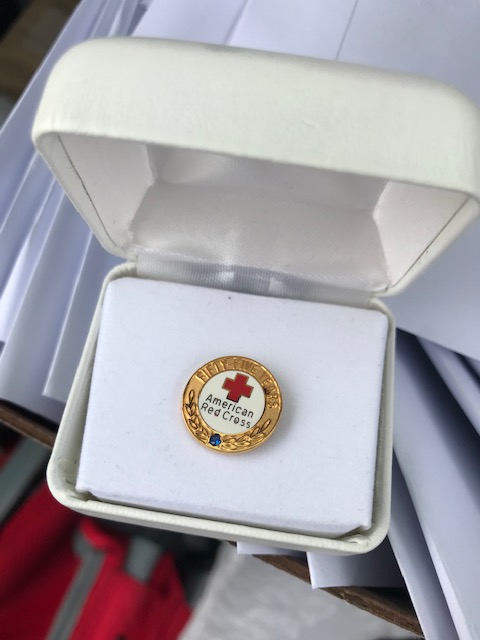
Karen Smith recently celebrated 55 years as a Red Cross volunteer.

Karen Smith’s lifetime of community service is one such story.

A resident of Fair Oaks, Calif., she recently celebrated a 55-year span of volunteering with the Red Cross.

The retired registered nurse has used her professional skills and compassion for others to impact local families and individuals for decades.

She started her career as a neurosurgery intensive care nurse at Los Angeles County General Hospital, now known as Los Angeles County + USC Medical Center.

In 1964, Karen left her position to care for her growing family when her oldest son was born. Her desire to continue helping others pushed her to seek alternative volunteer opportunities that would support her schedule.

Her search led her to the Red Cross.

Smith received this pin to commemorate her 55 years of service.

Karen began teaching local Mother Baby Care classes which walked new parents through newborn care essentials such as breastfeeding and bathing.

After relocating to the Sacramento area, she continued her Red Cross volunteer work even after she returned to her nursing career, working flu shot clinics and first aid stations at state and county fairs.  Karen has been administering the flu shot for 25 years and has seen first-hand how accessible health care can positively impact a community.

“Fifty-five years is a great accomplishment,” said California Gold Country Region Volunteer Services Officer Jennifer Campbell. “We value the lifetime she has given for others.”

 These days, Karen is working to helping to administer the Covid-19 vaccine.

“Part of my job is not just giving the shot, but making the patient feel comfortable,” she said. “What I like about it is being able to talk to people and explain to them what we are going to do. It gives me joy to see them happy that they have done something for themselves.”

When asked why she volunteers, Karen said, “I would never think of walking away if there was something I could do to help.”

With those inspirational words, we thank Karen Smith for her decades of service to help alleviate human suffering and to inspire hope in her community.

‘What Do We Do Now?’ Finding Answers at the Local Assistance Center

By Peg Taylor, Red Cross Volunteer

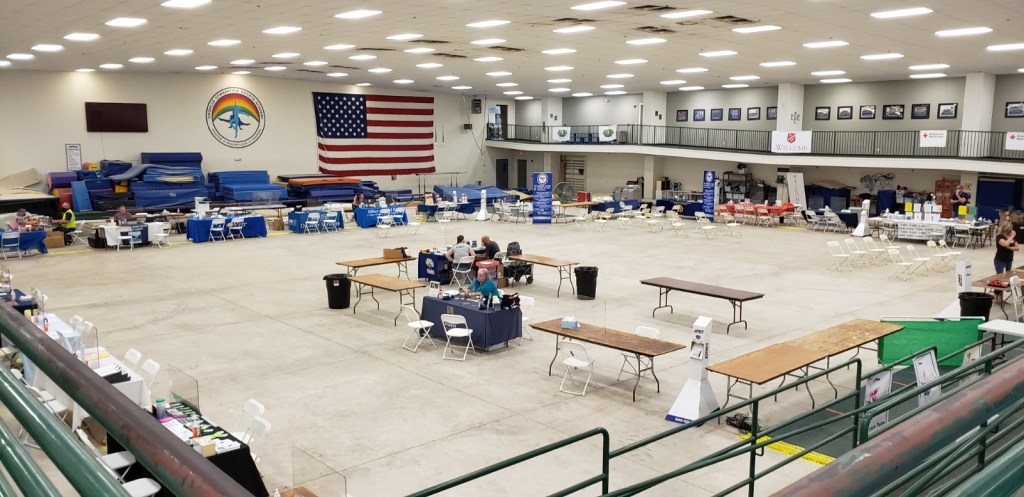
When disaster strikes, the Red Cross and partners are quick to respond by providing evacuees with motel lodging, food and other support. However, once sheltered and safe, the common concern among evacuees is, “What do we do now? What’s next?”

There are often many questions about how to take the next steps needed to rebuild their homes and their lives.

Many of those questions can be answered at a Local Assistance Center (LAC). 

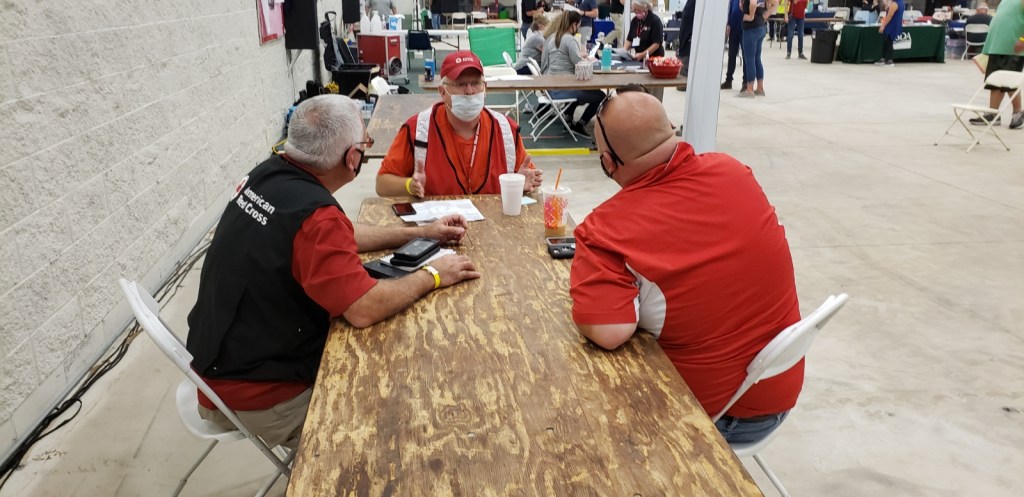
LACs are opened to assist people with recovery from disasters and provide a wide variety of services in one place. County, state and federal agencies, as well as nonprofit organizations, are available to assist residents with accessing information about homeowner’s insurance, steps to rebuilding their homes, community and social services, replacing vital records that may have been lost, and a number of other services.

The American Red Cross is an active participant at LACs and provides mental health services, health services, emotional and spiritual care, plus Individual Assistance funds for clients whose homes were destroyed or damaged.

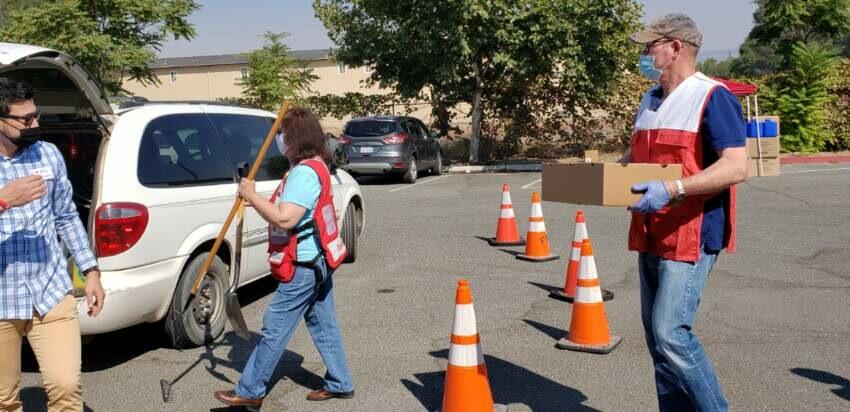
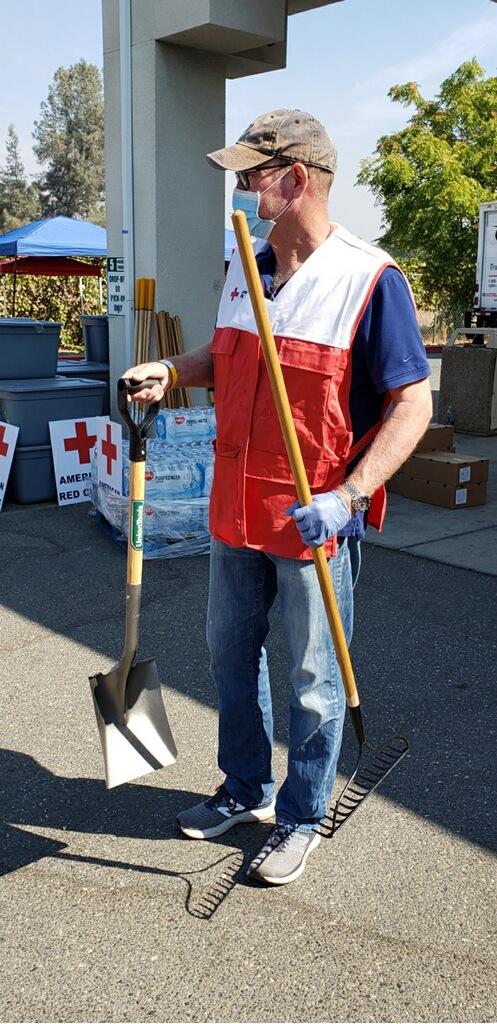
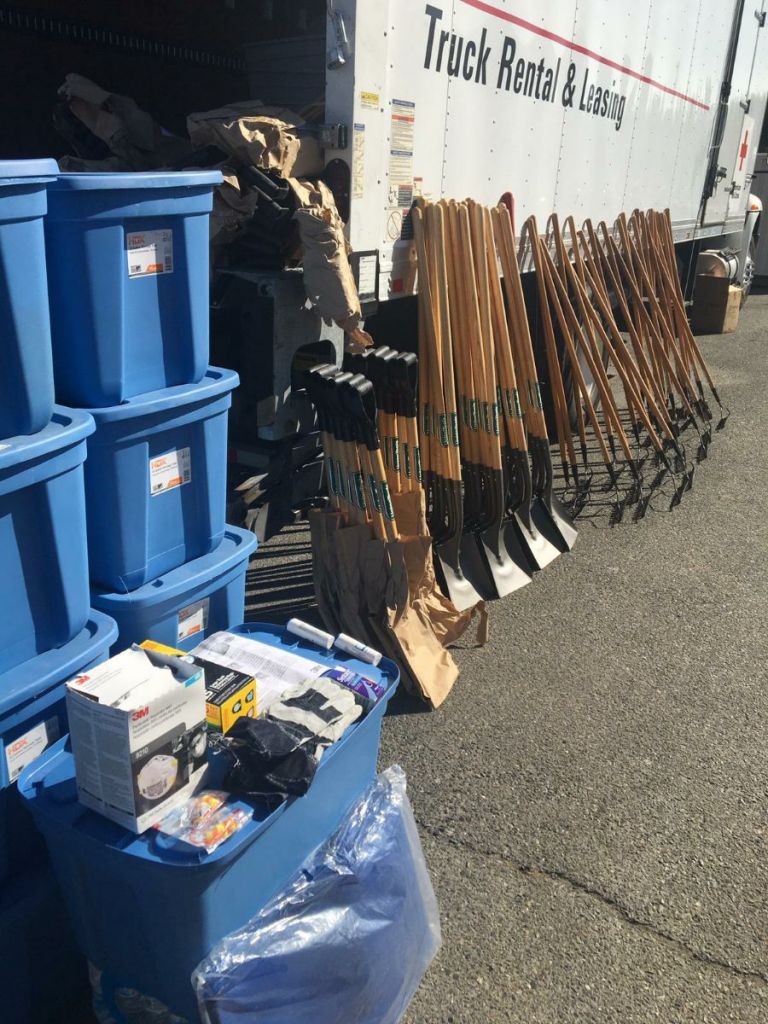
For those who are allowed to return to their property to search for belongings, we also hand out wildfire kits that include heavy work gloves, tarps, rakes shovels, masks and other items needed to search through rubble.

Evacuees lined up early on September 22 at the LAC in Oroville which was opened to assist people affected by the North Complex West Zone. Many had recently evacuated from their homes in Berry Creek, a small, isolated community in the hills about 20 miles up the mountain from Oroville.

The look of disbelief was clear on the faces of the people lined up to receive help. The Red Cross had provided motel lodging and meals to many in line, but they were housed in cities across the region and had lost contact with others from their community.

They used the time in line to catch up with neighbors from Berry Creek and shared stories and information about what was still standing in their community. They grieved the loss of their little town as they learned of destroyed buildings and businesses.

Evacuees told stories of leaving their homes in the middle of the night with little warning. One man recalled having to lie in a creek while the fire storm burned over the top of him. Others told stories of rescuing people who were stranded with no transportation.

Rickie described his hilltop home as “tranquility at its finest” and apologized for crying. He and his uncle were only alive because they took shelter in a 5,000-gallon water tank on his property while the fire burned through. His home was destroyed, and Rickie was interested in gathering information from agencies at the LAC that will help him learn how to rebuild is home and his life.

Nyda, a long-time resident, spoke of leaving the home her father had built 50 years ago and described the beautiful woodwork and stained glass in the home. The home is gone now, but Nyda is relieved to still have a water supply and is hoping to rebuild.  She was unsure if her insurance would cover the total cost of rebuilding and hoped to get some answers and guidance during her visit to the LAC.

As they left the LAC, evacuees indicated that many of their questions had been answered and they felt more at ease that they would be able to eventually get back on their feet.  They picked up wildfire kits from the Red Cross truck and returned to their motel lodging, ready to take the next steps necessary to move forward with their lives.

It is due to the generosity of donors that the Red Cross can assist people during some of their darkest days. The Red Cross and communities across northern California thank our donors for their generous support.

If you would like to support Red Cross disaster response efforts, please visit redcross.org/donate to make a donation.

A Small Celebration of Togetherness, in Emergency Lodging with So Much Lost to Fires

By Justin Kern, American Red Cross

Mary Ford said today’s lunch delivered by the American Red Cross to her evacuation hotel room would be a celebratory one.

Her son was alive.

And she was lucky to be able to report back to friends that she was alive, too.

“That’s the best thing that’s happened out of this whole mess,” Ford said, welling up with tears.

When fires swept through her community of Berry Creek, Calif., in early September, Ford received the alarm on her phone to evacuate. This wasn’t like the other warnings in the past weeks or even past years. These were flames scorching straight toward her home.

American Red Cross volunteer Mike Woods brings lunch to Mary Ford, who has had to evacuate her home of 40 years in Berry Creek after recent wildfires.

In the hurry to leave, she grabbed what she could for the next few days, still thinking that she’d be able to return soon to the home she built and powered off-the-grid for the past four decades. She had a new cell phone she was just getting used to and her van had enough gas to get away from the encroaching smoke and heat.

A few days in, it became clear this fire wasn’t like the others, not for Berry Creek or numerous other communities all along the West Coast. Scraps of updates on fire and damage came her way from friends, though no word of her son, also a resident of that same community. For rest and resources, Ford came to a Temporary Evacuation Center and received evacuation lodging at a hotel, like more than 2,000 other people nightly by mid-September through the Red Cross and state agencies in California.  

Ford’s move into a hotel was nearly two weeks ago. On Sept. 20, Ford – with wise eyes and a giving voice – remained unsure on the status of her home and property, where she raised her family in “a beautiful place in the woods, in the hills, by a creek but up the highway from everything you need.” With a self-professed “hippie” spirit, Ford lauded Red Cross volunteer Mike Woods for the day’s lunch delivery, macaroni and cheese with ham and a side of fruit. And she proclaimed that it was a joyous meal during an anxious time, as Butte County Sheriff’s deputies had helped her connect with her son for the first time hours prior. Between the Red Cross, first responders, the hotel staff and her neighbors, Ford said she’s felt a stronger spirit of community even as the physical structures of her own neighborhoods remain in doubt.

“Everybody’s really come together,” Ford said. “That’s something I’ve known for a long time but now it’s real to me. … It’s like faith,” she said, later adding, “All of these places, we’re in this as one.”

Mary herself was roaming after the fire. She stayed in a van for the first few days, thinking evacuation orders may be lifted, that the damage may miss her street. Meanwhile, friends were reaching out to try to find “Merry Mary,” as she’s casually known to friends. Mary, dealing with pain from her work as a home healthcare provider, found her way to a Temporary Evacuation Point opened early on in the evacuations in Butte County. From that contact, she was able to resituate into a hotel, one where many of her Berry Creek neighbors were also staying. And once there, Red Crossers were able to connect Mary with those loved ones, unsure of her whereabouts. (Find out more about our Safe & Well reconnection resources here.)

One of many roadside fire and burning warning signs in Butte County, just downhill from a Berry Creek community that has seen some of the worst from September’s deadly fires.

As for where and what is next for Berry Creek, the place she built and made her own, with family and friends since the early 1970s? Ford is buoyed by recent reconnections though she has also received difficult updates. A beloved kitten, Nickelodeon, perished, as did a rooster and chickens. In pictures shared among neighbors from a firefighter who had been into the affected community, Ford can make out a shed that was once her daughter’s playhouse and a pile of items to disposed of in winter. Other than that, from her property, she said: “As far as I know, that’s all that’s down there.”

Your generosity continues to directly help thousands of people evacuated by wildfires in northern California and all along the West Coast. Thank you for considering a gift to support people in need from the Western wildfires.

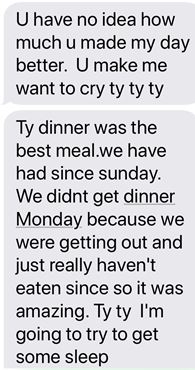
Wildfire Evacuee Thanks Red Cross Volunteers: ‘U Have No Idea’

By Stephanie Gaito, Volunteer

On Monday night, August 17, Margaret Grant received an after-hours call from her insurance agent. Evacuation warnings had been issued for the North Complex fires near Susanville, but she was waiting for more information.

Once the phone rang, Grant knew the call from her agent must be urgent, and she was correct. The agent urged her to immediately evacuate the home she shared with her fiancé and parents. Their property was in danger as the fire rapidly headed in their direction.

Grant and her fiancé, Rick Duckworth, moved six years ago to rural Susanville from Southern California to help her parents care for their family home and surrounding property. That Monday when they were evacuated, her family’s safety was the main concern. As each family member headed to a safe destination, her worries were put to rest.

“As long as my parents are safe with my brothers, Rick and I would have slept in our car and done whatever we needed to do,” Grant said.

Grant and Duckworth used their own resources to cover the expense of staying two nights at the Diamond Mountain Casino in Susanville. They didn’t want to bother anyone or use resources for others in need.

“At that point, it has been over two days, and we had pretty much run out of funds” she explained. “We didn’t know what we were going to do. Later that day, a lady called and asked if we had eaten, and at that point we hadn’t,” she explained through tears. “She called and took care of our food and she has called and checked on us every single day since.”

The woman who called Grant was a Red Cross volunteer, and she Textmade sure to take care of the family’s needs. The Red Cross assisted by covering additional nights at the hotel and by providing meal tickets and vouchers to Grant and her fiancé so their stay was as safe and hassle free as possible.

Grant and her family had made considerable efforts to protect their home from wildfire, including maintenance of defensible space and adding fire suppression tanks to the property. When asked if there was anything she would recommend to those looking to protect their homes, maintaining well equipment was high on her list. She said to make sure all equipment has been serviced and maintained to ensure sufficient water pressure, as this could save your home.

“I’m just grateful for the firefighters up here. Between the Red Cross and the firefighters, we would have lost our house if it wasn’t for them.”

If you would like to support Red Cross disaster relief efforts, visit redcross.org.

Reflections on Volunteering with Amador County’s Interfaith Food Bank

the gang FB 2020The American Red Cross California Gold Country Region is helping to fill vacancies in the volunteer workforce at the Sacramento Food Bank and the Interfaith Food Bank in Amador County.

Both endeavors have added up to many hours of volunteering, many thousands of pounds of distributed food and a lot of pride in serving these communities.

Below is a note from Disaster Program Manager Debbie Calcote on what the experience has meant to her:

When the sheltering in place order was set, I was already working in the local Emergency Operations Center. My role was to help make sure that our food banks were able to maintain a supply of food for the communities.

Adel Welty and I worked with local churches to find all the places that had small food pantries, and we have maintained open communication with them throughout.

But working with other agencies to make sure food got out was way different than working the food bank.

When I was first reaching out to volunteers and friends to help there, I heard a lot of different excuses.

Here are some of the responses:

  • “It’s too far to drive.”
  • “Why would I want to stand all day and sort fruit and vegetables?”
  • “Can’t they (the food bank) just put stuff in a bag and hand it to them? Do we really have to bring it out to them?”
  • “ I really have to clean my house and go grocery shopping.”

These were just a few examples of what I heard. When my Operations Coordinator Carolyn Stinemates advised that there was a real need for more support there, I decided it was my duty to step in and help.

Well, I received an eye opening, and a heart filled with sadness, joy,  and much gratitude for having this opportunity to be there and to help our communities.

The first day, I was sorting good vegetables and fruit in the morning. Then the bank opened for people to come park in front.

We take their order and note the number of family members. We run that back inside to the warehouse where there are other people bagging and boxing just about everything (including some sweet treats, which everyone needs now and then).

Then someone brings the cart out to us to deliver to the car.

My first car was a piece of cake. It went smoothly. They said thank you and I told them to have a nice day.

My second car was an elderly woman in her late 80s to early 90s picking up for herself and a neighbor. I loaded a couple small boxes into her trunk and walked away waiting for them to bring out her shopping cart of groceries.

I just got back inside when I heard someone ask for some assistance. I walked to the door and there by her car was my little lady. She needed help closing her trunk.

When I asked why she wanted it closed her response was, “I can’t drive down the road with it open, dear.”

I smiled and told her the rest of the groceries would be out shortly. Her eyes got big and she said, “There is more?”

I smiled and said yes, there is more.

Shortly thereafter her cart came for me to load into her car. She stood there looking at me with bewildered eyes. “Who does all that belong to?” she asked.

When I told her it was hers and her neighbors, she started to cry. She was so grateful.

But best of all, she and her neighbor had been sharing the small amount of food they had left in their cupboards since neither of their families had come to bring them shopping in about six weeks due to Covid-19.

 Someone told them they could go to the food bank for groceries, but she told me they still had some canned food and powdered milk left and we didn’t want to take away from those who really needed it.

My heart swelled and we both had tears in our eyes. To watch as we loaded bag after bag into the trunk, the tears falling down her cheeks were priceless to me.

I was bringing joy, and much needed food to two wonderful ladies.

So to me, seeing the need, the gratitude, and overwhelming joy from receiving food was more than words could express.

Every person who has come when I have been there has so much appreciation. You cannot help but enjoy being there and be a part of a community that helps those less fortunate and  especially, our senior population.

The work is priceless. It will fill your heart and soul.

Working as a team with others and the staff at the food bank to accomplish this task is amazing. They are the best. I am grateful to help.

 I greatly appreciate everyone who will, has, and have been supporting this important mission.

Thank you all!