A big thank you to Cowabunga Ice Cream Truck out of Valley Springs for delivering some frozen sweet treats to our shelter in San Andreas this week.
During a wildfire, when our shelter guests have lost so much, something as simple as ice cream can sure boost their spirits!
Cowabunga’s owners posted on Facebook: “A great night visiting evacuees and volunteers in San Andreas. Next stop Amador! Passing out free ice cream for those who have been displaced and those that need a smile on their faces. Fun night.”
Thank you for caring, Cowabunga!
For information on how you can support the American Red Cross during times of disaster, visit redcross.org/donate.
Michelle Symington and Shelley Royce evacuated from their homes in Amador County to escape the Electra Fire burning in Amador and Calaveras counties.
They are staying with their beloved dogs and cat on at the Red Cross shelter located at the Italian Picnic Grounds in Sutter Creek. There, they are provided food, snacks, beverages, health services and a bevy of other support.
“This is the first time we’ve had to evacuate due to a disaster. It’s a tough time for us,” Michelle said. “I’m worried about my husband’s health condition, but he’s being cared for here.
“We’d much rather be home watching ‘Downton Abbey’ but, on the bright side, I’ve met so many people here who have been so kind and helpful. I like to help people so have decided to check into becoming a Red Cross volunteer”.
If you would like to support Red Cross disaster relief efforts, visit redcross.org/donate and click on “Disaster Relief” in the dropdown menu.
California Gold Country Region volunteer Deborah Harper has been awarded the 2021 American Red Cross Ann Magunsen Nursing Award.
This award is presented annually to a volunteer or employed registered nurse who has made an outstanding contribution to strengthening or improving American Red Cross programs and services. It is the highest honor of individual nursing achievement in the American Red Cross.
“We value your work as the Nursing Network Regional Nurse Lead and your many Disaster Cycle Services volunteer positions. Your humanitarian spirit is reflected in your outstanding leadership, dedication and accomplishments,” noted National Nursing Committee Awards Chairperson Laurie Willshire.
In presenting the award, Red Cross Chief Nurse Linda McIntyre said, “Your humanitarian service has a far-reaching impact and I’m grateful that you share your time and expertise with the Red Cross.”
As expected, Deborah has received an outpouring of praise from our staff and volunteers. In an email she said, “I appreciate everyone who has taken the time to send congrats. It means a lot. I’m so fortunate to be a part not one but two amazing regions!!!”
Blood Donor Ambassadors welcome donors to blood drives and provide friendly support before and after they give. This can include helping donors to register, answering their questions, and assisting them at the refreshments table. Hear firsthand why others have volunteered in this role. Training is free, but the support you provide is priceless. Make a difference by joining the American Red Cross to collect lifesaving blood to those in need.
Disaster Cycle Services
Disaster Action Team – Every day, people are forced from their homes due to fires, storms, or other disasters. Our Disaster Action Team volunteers respond day and night to meet the immediate needs of their neighbors. Our help may include financial assistance for food, clothing, and lodging; emotional support; or replacing prescription medications and other critical items. Learn more about this role. Training is free, but the hope you provide is priceless.
Recovery Caseworkers – Dedicated teams of American Red Cross volunteers continue to step up to address the deep and diverse needs of our communities. Recovery Caseworkers provide follow-up and recovery planning services, including referrals, for individuals and households affected by local and regional events – primarily home fires.
Disaster Responders – Feeding & Sheltering – Every year, thousands of families are affected by wildfires in Northern California. Volunteering for the American Red Cross gives you a way to directly impact these families by providing meals, shelter, and hope. Register to volunteer today so you can complete training before it’s needed. Your volunteer support is critical. Let’s help. We can’t do it without you.
Disaster Health Services – Disaster Health Services teams address the unmet disaster-related health needs of impacted individuals, families, and communities. They provide hands on care within a RN-led model, assistance with replacement of medication, durable medical equipment, glasses, dentures and other medical supplies, and support individuals with disabilities and functional and access needs. Current unencumbered license required for RN, APRN, DO, EMT, LVN/LPN, NP, Paramedic, MD, and PA.
Service to the Armed Forces
Resiliency Facilitators – The Red Cross continues its work with the military plus community helping families strengthen their resilience to stressors they encounter during their loved one’s deployment. We believe ensuring that family members are prepared and trained to cope with stresses and challenges that may arise without the support of their spouse or loved one helps our deployed service members focus on their mission. A current and unencumbered license with master’s level or above mental health degree is required.
Volunteer Services – Screener– Many Red Cross volunteers serve in support roles working behind the scenes. Screening Team members seek to understand what brought prospective volunteers to the Red Cross, their areas of interest and what position they would find most meaningful. This is a great opportunity to develop administrative and interviewing skills. Learn more about this role.
I’ll never forget the little guy looking up at me and with almost tears in his eyes, looking first to his father for approval and then back at me (after his father had nodded OK) to accept the Mickey Mouse doll that I had offered.
The little guy looked back at me, now with tears in his eyes and mouthed, “Thank you.”
I almost lost it. Even today, that memory impacts me every time I think about that family and their kids.
It was a dark, cold and windy night in January. The single-family home was at the top of the property and it was still burning when our Disaster Action Team arrived.
The family (mother, father and two small children) were huddled on the wet grass in front of their home. A neighbor sat nearby with some paintings and photographs that he was trying to dry off and salvage after they were removed from the home.
That event took place over eight years ago. I hope those kids remain warm and safe. I still think about them and wonder how they are doing. I think that I always will.
There was not much for us to do until the family started thinking about their recovery. The two kids were about three and five years old. Because of their age, they were not really able to comprehend the gravity of the situation. Their home was being destroyed. The only thing that they really understood was that their toys were “gone.”
If you are interested in volunteering with your local Red Cross Disaster Action Team, click here.
You can also support the Red Cross by making a financial contribution or supporting our BASH virtual auction and event later this month.
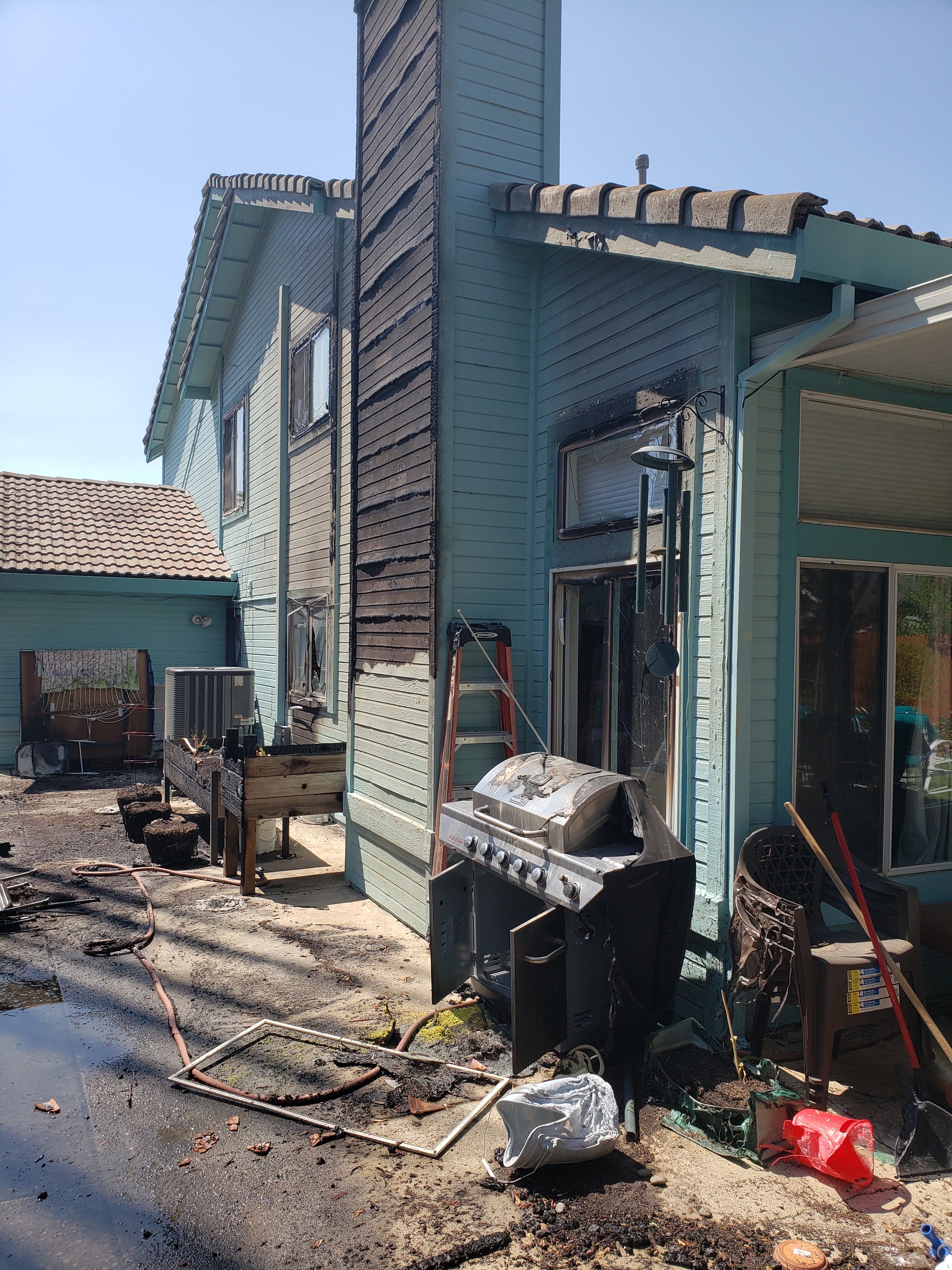
Paula Metz and her family know firsthand the value of the American Red Cross Home Fire Campaign.
Their Roseville, Calif. home caught fire in August, 2021.
The Metz family’s Roseville home caught fire in August, 2021. The family credits preparedness information learned through the American Red Cross Home Fire Campaign for safely evacuating.
When the fire happened, the family of five, including one person who uses a walker, had to evacuate. They were able to respond quickly and evacuate safely due to the knowledge and evacuation planning provided them by the Red Cross.
“The fire happened so quickly. Having the Red Cross training was helpful. I felt a sense of readiness,” said Metz.
“Before, I wouldn’t have thought about my cars, full of gasoline, as being accelerants. One of the first things we did when we got out was to get our cars out of the driveway and away from the house. I’m now more aware of these things.”
“A month prior to the fire, the Red Cross did a telephone interview to educate us on fire preparedness, how to prepare an evacuation plan, how to use fire extinguishers, how to make sure our smoke alarms were working,” said Metz. “They also sent a package of information for me to read.”
Home fires are the most frequent and deadliest disaster in the United States. Every 24 seconds, a fire department in the U.S. responds to a fire somewhere in the nation, according to the National Fire Protection Association. On average seven people die each day from these fires and 36 people are injured.
When a home fire happens, those inside often have less than two minutes to get out safely.
To reduce the high number of home fire fatalities and injuries, the Red Cross launched the Home Fire Campaign in 2014. The program educates people about home fire safety, helps them create customized evacuation plans, and provides installation of free smoke alarms in neighborhoods at high risk for home fires.
So far, more than 1,200 lives have been saved in the U.S. as a direct result of the Home Fire Campaign. Seven of those, including the Metz family, live in the California Gold Country Region of the Red Cross.
Paula and her family are thankful they took the time to participate virtually in the Red Cross Home Fire Campaign. “I hope others check out Red Cross’ fire preparedness information,” she said.
For more information on the Red Cross’ Home Fire Campaign, to donate to the Red Cross, or to join thousands of volunteers across the country who come to the aid of people impacted by home fires, visit redcross.org.
As the American Red Cross reports its lowest blood supply in a decade, one cancer survivor’s story illustrates the critical importance of blood donations.
Brittany DeNorscio was diagnosed with leukemia in 2017. Last month, she told ABC10 in Sacramento that she was thankful for the many anonymous donors who saved her life as she went through chemotherapy, bone marrow transplants and countless blood transfusions.
Now in remission, DeNorscio wants others to become blood donors.
“You could be, you know, walking down the street and pass somebody you don’t even know that you saved their life just by donating blood,” she told ABC10.
Dr. Sarah Barnhard, UC Davis Health Center’s Director of Transfusion Medicine, agrees.
“There is no other medical therapy that can replace giving blood transfusions to patients,” she told ABC10. “There are a whole host of patients that need blood transfusions in order to survive. They would include everyone from the oncology wards to patients who deliver babies and then have bleeding afterward.
“Even tiny babies in the intensive care unit oftentimes need to have blood transfusions in order to save their life.”
The Red Cross must collect about 12,500 blood donations and nearly 3,000 platelet donations every day for hospital patients. All from volunteer donors.
January is Blood Donor Month. To donate blood, simply download the American Red Cross Blood Donor App, visit RedCrossBlood.org, call 1-800-RED CROSS (1-800-733-2767) or enable the Blood Donor Skill on any Alexa Echo device to make an appointment or for more information. All blood types are needed to ensure a reliable supply for patients.
A blood donor card or driver’s license or two other forms of identification are required at check-in. Individuals who are 17 years of age in most states (16 with parental consent where allowed by state law), weigh at least 110 pounds and are in generally good health may be eligible to donate blood. High school students and other donors 18 years of age and younger also have to meet certain height and weight requirements.
Blood and platelet donors can save time at their next donation by using RapidPass® to complete their pre-donation reading and health history questionnaire online, on the day of their donation, before arriving at the blood drive. To get started, follow the instructions at RedCrossBlood.org/RapidPass or use the Blood Donor App.
By Kim Mailes, American Red Cross public affairs volunteer
For Frieda Ingram, right now “home” is a cot in the American Red Cross emergency shelter in Reno, Nevada. Despite being evacuated from the South Lake Tahoe when wildfires approached her apartment, she’s all smiles and maintains a positive attitude. This is just another bump in a long road that’s been filled with obstacles.
“I’m so grateful for the Red Cross,” she said. “I know I’ll be safe here until this is over.”
By Barbara Wood, Red Cross Public Affairs Volunteer
It’s been more than two weeks since Josephine Hernandez and her six children had 30 minutes to pack their car and to evacuate the looming Caldor Fire, but on Sept. 1 as the family awaited news that they could return to their Pollock Pines home, the children joyfully played on a lawn at the Green Valley Church Red Cross shelter in Placerville.
Five of Josephine Hernandez’ six children cool off in a kiddie pool outside the room at the Red Cross shelter in the Green Valley Church in Placerville that was their home for more than two weeks as they awaited word that they could return to their home in Pollock Pines. They are (l-r) Adriana, 13; Briana, 13; Camille, 6; Daniel, 2 and Steven, 4. Photo by Barbara Wood/American Red Cross
Hernandez and her six children spent the first two nights after their Aug. 17 evacuation sleeping very close together in the family’s Suburban. Then they heard about the shelter that had been opened at the Green Valley Church in Placerville. After a few more nights in the church parking in two borrowed tents, the family was moved into a classroom at the church.
“It’s been terrible,” Hernandez said. “More than a challenge.”




 Gold Country News and Notes