Once a Recipient of Red Cross Assistance, Volunteer Steps Up to Help

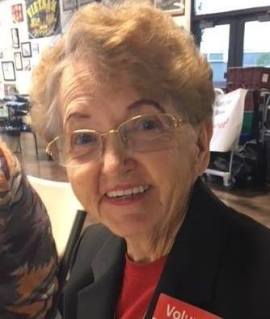
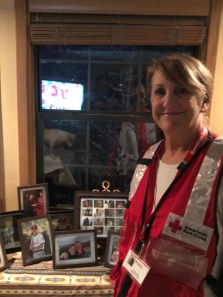
Tammy ArtolaTammy Artola had not anticipated needing the American Red Cross’ assistance when she headed up to Truckee with her family for some time away.  She was with her daughter and grandson while her daughter’s boyfriend had stayed home to work.

At 2 a.m. she got a call that the mobile home on their 15 acres was on fire and that the flames were heading toward their home.

She remembers two members of the Red Cross Disaster Action Team (DAT) who were called in to help. They comforted the family and helped with what was needed in alleviating the stress of all that was going on.

In the weeks that followed, they sorted through losing the mobile home, a workshop and many valuables. Tammy’s daughter and her family struggled to figure out where to go and how to process it all and ended up moving to Alabama in order to be near her boyfriend’s family. Their departure was incredibly hard on Tammy and she struggled with not being near her family.

Tammy was depressed for several weeks after her family left, and realized that she needed to add something to her life. She wanted to give back to those who might be in need and decided to call one of the DAT responders who had helped them through their ordeal.

Tammy has been a Red Cross Volunteer for a year now. She has received training in sheltering and is now a member of her local DAT team. In addition, she has gotten involved with Red Cross Service to the Armed Forces and has taken on a lead role in her local Sound the Alarm campaign.

One of the hardest parts of volunteering for Tammy is that she struggles with letting go after helping a client. She says she wants to follow up and provide as much care as possible, often wondering about the people she’s helped long after assistance is provided.

She experienced this on her first DAT call after helping a gentleman who experienced a fire at his mobile home. She recalled that it was a bit unsettling a first, not being sure of what to expect as she traveled into the park on a single access road. The gentleman was waiting for her team at the home of his landlord.

Tammy spent much of the time listening to him talk and providing a needed distraction from all that was going on. They were able to call a nurse to help with the man’s needs and found transportation to get him started on the next steps.

Tammy stated that she wished they could have done more and still wonders how he is doing from time to time.

Through the process of volunteering, Tammy feels that she has learned better listening skills, how to be prepared, and has gleaned so much from the volunteers around her.

Tammy says she enjoys volunteering for the Red Cross because it makes her feel good helping others and it reminds her of how lucky she is. She would encourage those who are thinking about volunteering to attend a local meeting to meet other volunteers and ask questions.

Even though a lot of training is involved, Tammy advised new volunteers to stick it out because it is so worth it.

Story by Americorps member Lauren Crutchfield
Irish Red Cross Volunteer Reflects on Her Time in the Gold Country Region

Niveta-3-300x225

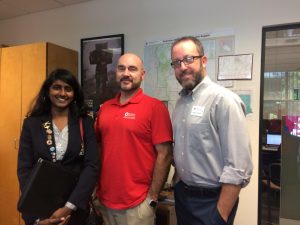
The American Red Cross Gold Country Region was fortunate last year to have met and provided training to Niveta Ramakrishnan, a third-year medical student and volunteer with the Irish Red Cross.


We were so impressed with her dedication to the Red Cross and her tenacity in learning all she could about what we do in the United States.

Read Niveta’s blog post about her time in Sacramento!


Despite Cancer Diagnosis, Volunteer Loretta Walker Dives into Blood Services, Focuses on Kids

53588532_2195174303872708_2859472256537460736_nTwelve years ago, doctors told Loretta Walker she had only few months to live and she should return home to put her affairs in order.

Cancer.

Instead, she began volunteering at the Red Cross blood center in Manteca. Having received transfusions herself, Loretta has had firsthand experience with blood donations and knows how important donating blood is for the community. In addition to her canteen work and volunteering at local mobile blood drives, Loretta offered to coordinate volunteers for the Manteca center.

“I love communicating with the other volunteers and donors,” said Loretta. I have made some new friends and love visiting my old friends too.”

Another project near to Loretta’s heart is helping Manteca youth. For the past 10 years, Loretta has been an integral part of the FUN (Friday Unity Night) Club. Determined to help keep kids off the streets and away from drugs, community leaders created a safe haven every Friday where kids would go to play games, hear live music and participate in presentations from the police and fire departments.

Loretta continues to serve, despite her ongoing fight against cancer. In April 2018, Loretta had radiation treatments because the tumors had grown. “I don’t give up,” she said. “I am dedicated to working with the community and all the people in it.”

Paws-itively the purr-fect partners

Furry Friends + Red Cross raise the ruff!

By Doug Bardwell, American Red Cross volunteer

When disaster strikes, a furry friend can afford tremendous comfort to a family, and most pet owners do consider their pets to be part of their family. Keeping them together, therefore, necessitates being able to keep owners and pets as close as possible.

For Camp Fire survivors, there was room to shelter their pets immediately across from the men’s and women’s dorms in the Silver Dollar Fairgrounds. While known for sheltering people, the American Red Cross turns to partner agencies to assist with pets.

Operating the temporary shelter and keeping the pets healthy is the responsibility of Furry Friends Pet Relief from Antioch.  Founded by Erin Piña of Oakley, California, Furry Friends began helping in mid-December and took over operation of the shelter on Christmas Eve.

A visiting veterinarian, Dr. Lauren Knobel, has been stopping in and helping set protocols to assure each animal is healthy and up to date on their shots.

Presently, the shelter is still housing over 30 pets, including dogs, cats, and birds. Assisting is shelter manager, Morgan Macy, of Yuba City, who has been here since the shelter first opened. “Thankfully, I can now say that all our dogs are happy and healthy again, and back in general population,” explains Macy.

The shelter is set up in a large A-frame building with dozens of cages of varying sizes. Birds and cats to the left and most dogs to the right. The exceptions are three pups and their mom, just to the left of the reception table.

Stealing the show are the three, fluffy, Alaskan Malamute pups, born on Halloween, shown here with (L-R) Morgan Macy, Grady Grammar and Demetra Poulos.

190110-9637

If you are a cat person, then you are going to love Dinky, held here by Piña. She’s super friendly, and a crowd favorite.

erin&dinky_img_8235 2

The shelter’s hours are 9 a.m. – 5 p.m. each day and owners are encouraged to spend time with their pets whenever feasible. “If it were me,” says Macy, “I’d be spending as much time as possible with mine. They are suffering just like their owners, and they need to work together as the family members they are.”

If owners can’t walk their dogs daily, one of up to 20 volunteers takes care of walking each animal, three times each day.  Large fenced enclosures enable the dogs to play catch or run freely for exercise.

One owner, Dustin Lee, (R) enjoys playing around with his Pitbull, Hitch. “I got him about a month ago from the local humane society, and we love to horse around together,” says Lee. They enjoy having space outside where Hitch can run free in the enclosure.

190110-9634

Presently seven AmeriCorps volunteers from San Jose are also assisting Piña and Macy with feeding, watering, walking and cleaning cages. Here every day, the volunteers work from 9:00 a.m. until 6:00 p.m.

Shelter residents, as well as Red Cross workers, have been extremely complimentary about the pet shelter, and Furry Friends hopes to work with Red Cross again on future disaster responses that include pet-sheltering operations.

Teamwork After the Hurricane: All for the Animals

By Stacey Shell

Derek was sitting on the back of his truck on the main street in Marianna, Florida earlier this week. He and his mother, Charlotte, are from Pensacola and were affected by Hurricane Ivan several years ago. They were caught unprepared.


37753Derek vowed then that he would never again be caught unprepared and would be ready to help if a hurricane ever came to Florida again. He has a soft spot in his heart for animals and knew that was an area of need that he could help with.
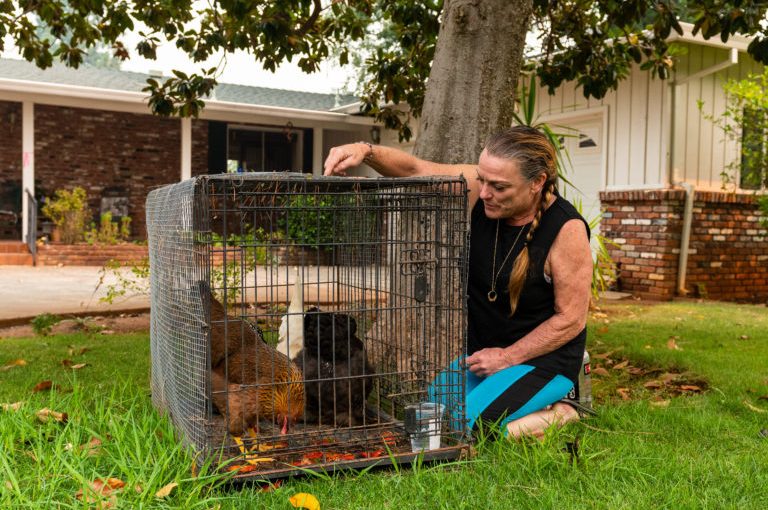
 

Derek and Charlotte collected more than 250 pounds of fruit and pet food from his car club, church and community members. For the past two weeks they have driven down to Tallahassee to give it away to anyone in need.

The mother and son have been driving around the back roads of affected areas where there is still no water, no power and, in some cases, clearing of the roads has not begun.

They came upon one house that had been evacuated but still on the property were foru dogs and five puppies that were left behind. Derek dropped three bags of dog food to which all of the dogs came running because they were starving.

Once I heard this story I could not leave without making sure the dogs were rescued.  We drove to the local animal control office where I met a gentleman named Ken. He was not an animal control worker, but happened to work next door.

None of the animal control people were there. I told him the story and asked him if he had any suggestions on how I can get someone out to the house to save the dogs. He got on the phone and called Karen who was a friend of his. I gave her the information and she promised that she would get someone out there.

As we were driving away, Ken drove up in his car getting our attention to let us know that the house was in a different county. I asked him if he had any contacts in that county so I could get help. He and Karen told me they would coordinate with the other county’s animal control department and they promised that the dogs would be taken care of.

Because of this mother and son team from Pensacola who were down here just to help, this Red Cross volunteer who believes no animal should be left behind, two local individuals willing to help, and the coordination of two county animal control groups, these dogs will not be forgotten and the puppies will have a chance to live a full life.

If you would like to contribute to the American Red Cross Hurricane Michael disaster response, visit redcross.org or call 1-800-RED-CROSS.

Stacey Shell is a Gold Country Region volunteer. She is on her first-ever deployment to to assist those affected by Hurricane Michael.

“All is Not Lost”: A Carr Fire Survivor Shares Her Story

Los Angeles-based Red Cross volunteer Carmela Burke recently completed her deployment to the Carr Fire in Redding where she assisted the public affairs team. While there, she got the chance to interview Terry Zeller, a resident whose home burned in the fire.

But thanks to the help from firefighters and the support of friends and neighbors, Zeller said, “All is not lost.”

Read her story here.

Gold Country Volunteer Says Kilauea Volcano Disaster was Like No Other

By Denise Nordell

Disaster Volunteer and Case Work Supervisor Jan Campbell has been deployed to more than 15 disasters since joining the Red Cross with her husband, Mike, in 2010. But Hawaii’s Kilauea Volcano presented a unique set of challenges to Campbell and her fellow volunteers.

Campbell, shown on the far right in the above photo, was deployed on May 25, one of handful of Gold Country volunteers sent to relieve the first wave of volunteers who arrived soon after the volcano erupted on May 3. At that time, the Red Cross was operating shelters at the Keeau Senior Center (later moved to the Armory), Sure Foundation Church, and—the largest, sheltering more than 200 people—at Pahoa Community Center. Jan and her fellow volunteers were housed at the University of Hawaii dormitories during their stay; Campbell returned home on June 9.

Campbell, who has worked disasters all over the U.S., from the Rim Fire (2013) to Superstorm Sandy (2012-13) and Hurricane Matthew (2016), observed several things that set the Kilauea Volcano apart. For one, “With a fire or flood, the rain eventually stops, or the fire is contained, and you wait until the water or flames subside so people can go back in and reclaim and rebuild their homes.” But with a disaster like Kilauea, where the volcano is still destroying land and homes the situation is still very much in flux the “land” in many cases is gone, and only lava beds remain. Campbell’s task as Case Work Supervisor was to work with clients to plan their next steps toward recovery.

Campbell, who understands that relief missions can be complicated, especially when they involve multiple agencies, felt that the partnership between The Red Cross, Salvation Army, Catholic Charities, county agencies and other organizations worked well. This depended on clearly defined roles for each organization. “There are always bumps in the road, of course,” said Campbell. “But everything fell into place within a short time. When we all work together and focus on our mission — relieving suffering — small differences fall away.” Campbell commented that the supervisory structure for this event was one of the best and most efficient she has experienced.

Another difference that presented some challenges was becoming accustomed to the Hawaiian lifestyle. For example, a “house” might mean something different to an Islander: it might have one fixed wall and screens or fencing. How do you go about replacing that? Many Hawaiians also prefer to live “off the grid,” said Campbell. “They are more laid back and feel less urgency about their day-to-day lives.” This meant that Campbell and her fellow relief workers needed to listen carefully to understand what each client’s idea of recovery meant to him or her. “People are amazingly resilient,” said Campbell.  “But this will be a long haul and that resiliency can understandably wear thin.” Nevertheless, Campbell found her clients to be patient, understanding, and grateful for the assistance they received.

When not deployed, Campbell’s “Steady State” job is working as Territorial Disaster Workforce Engagement Lead. In this role, she helps disaster responders find the assignment that they will enjoy within the Disaster Workforce, guiding them in seeking training classes to give them skills and knowledge through Red Cross classes.

Regardless of the unique challenges Kilauea presents, “Our mission is always the same,” said Campbell. “We are there to relieve human suffering and help [clients] recover and move on.”


This slideshow requires JavaScript.


Why I Work with the Red Cross

“I volunteer for the American Red Cross because I get the chance to help people who lost everything in a disaster, big or small.  I get to see people in both good times and bad.  But it can be a lot of fun also.  I get to take part in things that I would not normally do.  This gives the people the opportunity to see us also.  I am referring to all of the events we take part in.  I remember last year (after the wildfires) that we took part in two parades.  The people who were watching on both sides of the streets were applauding as we went passed.  This is a good feeling to know that we are appreciated for all that we have been doing.  We get to meet different people that we would not normally meet also.  We will always be there for people whenever they need us.  And we are continuously learning how to help them better.  I could carry on more but I am going to stop for now.”

— Robert Albonico

4th of July: Red Cross Steps for Enjoying a Safe Holiday Weekend Fireworks, beach safety tips to keep everyone safe this Independence Day

Sacramento, CA (June 28 2016) — Everyone is looking forward to the upcoming Fourth of July holiday weekend and the American Red Cross has steps they can follow to stay safe when enjoying the fireworks or taking a trip to the beach.

“Millions of people will visit the seashore or watch fireworks shows over the 4th of July weekend and there are steps they can take to have a safe holiday,” said Gary Strong, Chief Executive Officer of the Gold Country Region. They can also download our First Aid and Swim Apps to have important safety information at their fingertips.”

4th of july

FIREWORKS SAFETY The safest way to enjoy fireworks is to attend a public fireworks show put on by professionals. Stay at least 500 feet away from the show. Many cities and states outlaw most fireworks. If someone is setting fireworks off at home, follow these safety steps:

  • Never give fireworks to small children.
  • Always follow the instructions on the packaging.
  • Keep a supply of water close by as a precaution.
  • Make sure the person lighting fireworks always wears eye protection.
  • Light only one firework at a time and never attempt to relight “a dud.”
  • Store fireworks in a cool, dry place away from children and pets.
  • Never throw or point a firework toward people, animals, vehicles, structures or flammable materials.
  • Leave any area immediately where untrained amateurs are using fireworks.

BEACH SAFETY If holiday plans include visiting the beach, learn how to swim in the surf. Swim only at a beach with a lifeguard, within the designated swimming area. Obey all instructions and orders from lifeguards. While enjoying the water, keep alert and check the local weather conditions. Other safety steps include:

  • Swim sober and always swim with a buddy. Make sure you have enough energy to swim back to shore.
  • Have young children and inexperienced swimmers wear a U.S. Coast Guard-approved life jacket.
  • Protect your neck – don’t dive headfirst. Walk carefully into open waters.
  • Keep a close eye and constant attention on children and adults while at the beach. Wave action can cause someone to lose their footing, even in shallow water.
  • Watch out for aquatic life. Water plants and animals may be dangerous. Avoid patches of plants and leave animals alone.

RIP CURRENTS Rip currents are responsible for deaths on our nation’s beaches every year, and for most of the rescues performed by lifeguards. Any beach with breaking waves may have rip currents. Be aware of the danger of rip currents and remember the following:

  • If you are caught in a rip current, try not to panic. Swim parallel to the shore until you are out of the current. Once you are free, turn and swim toward shore. If you can’t swim to the shore, float or tread water until you are free of the rip current and then head toward shore.
  • Stay at least 100 feet away from piers and jetties. Permanent rip currents often exist near these structures.

DOWNLOAD SWIM, FIRST AID APPS The Red Cross Swim App promotes water safety education and helps parents and caregivers of young people learning how to swim. The app has features specifically designed for children, including a variety of kid-friendly games, videos and quizzes. It also contains water safety information for parents on a variety of aquatic environments including beaches and water parks. The First Aid App provides instant access to expert guidance on a variety of situations from insect bites and stings to choking and Hands-Only CPR. People can download the apps for free by searching for ‘American Red Cross’ in their app store or at redcross.org/apps.

The Red Cross and National Swimming Pool Foundation® (NSPF) have developed an online safety course for pool and hot tub owners. Home Pool Essentials helps people understand the risks of pool ownership, how to maintain a safer and cleaner pool, what safety equipment is appropriate, how to prevent pool and hot tub entrapment hazards, and how to respond to an emergency.

About the American Red Cross:
The American Red Cross shelters, feeds and provides emotional support to victims of disasters; supplies about 40 percent of the nation’s blood; teaches skills that save lives; provides international humanitarian aid; and supports military members and their families. The Red Cross is a not-for-profit organization that depends on volunteers and the generosity of the American public to perform its mission.

The Gold Country Region serves a twenty-four county territory including Alpine, Amador, Butte, Calaveras, Colusa, El Dorado, Glenn, Lassen, Modoc, Nevada, Placer, Plumas, Sacramento, San Joaquin, Shasta, Sierra, Siskiyou, Stanislaus, Sutter, Tehama, Trinity, Tuolumne, Yolo, and Yuba counties.

For more information, please visit redcross.org/GoldCountry or cruzrojaamericana.org. Stay up to date by following us on Twitter (@RCSierraDelta | @RedCrossNECal) or join the conversation on Facebook’s Sierra-Delta Chapter Page or Northeastern California Page.