Family hosts blood drive after Red Cross assists following devastating home fire

By Stephen Walsh

At around 1 a.m. on August 29, 2023, Katie Mummert was awakened by the sound of her fiancé, Chuck, screaming at her from somewhere inside their Clearlake home. The house was on fire.

“The whole hall was just orange,” Katie said. “I panicked and ran into (daughter) Rose’s bedroom. As we stepped into the hallway, the glass doors in the hallway exploded on us. The floors were so hot, my skin was just melting off.”

As Katie got to the back door of the house she realized she had let go of her daughter. “Rose in still in there!” she yelled at Chuck.

Chuck then crawled back into the house, and retrieved eight-year-old Rose, who was unconscious.

Both Rose and Katie were hospitalized. Katie had sustained burns over 30 percent of her body. Rose’s burns covered 67 percent of her tiny frame.

The pair underwent treatment, which included many skin grafts, at UC Davis Medical Center and Shriners Hospital in Sacramento. Katie was hospitalized for two weeks and Rose for a more than two-and-a-half months.

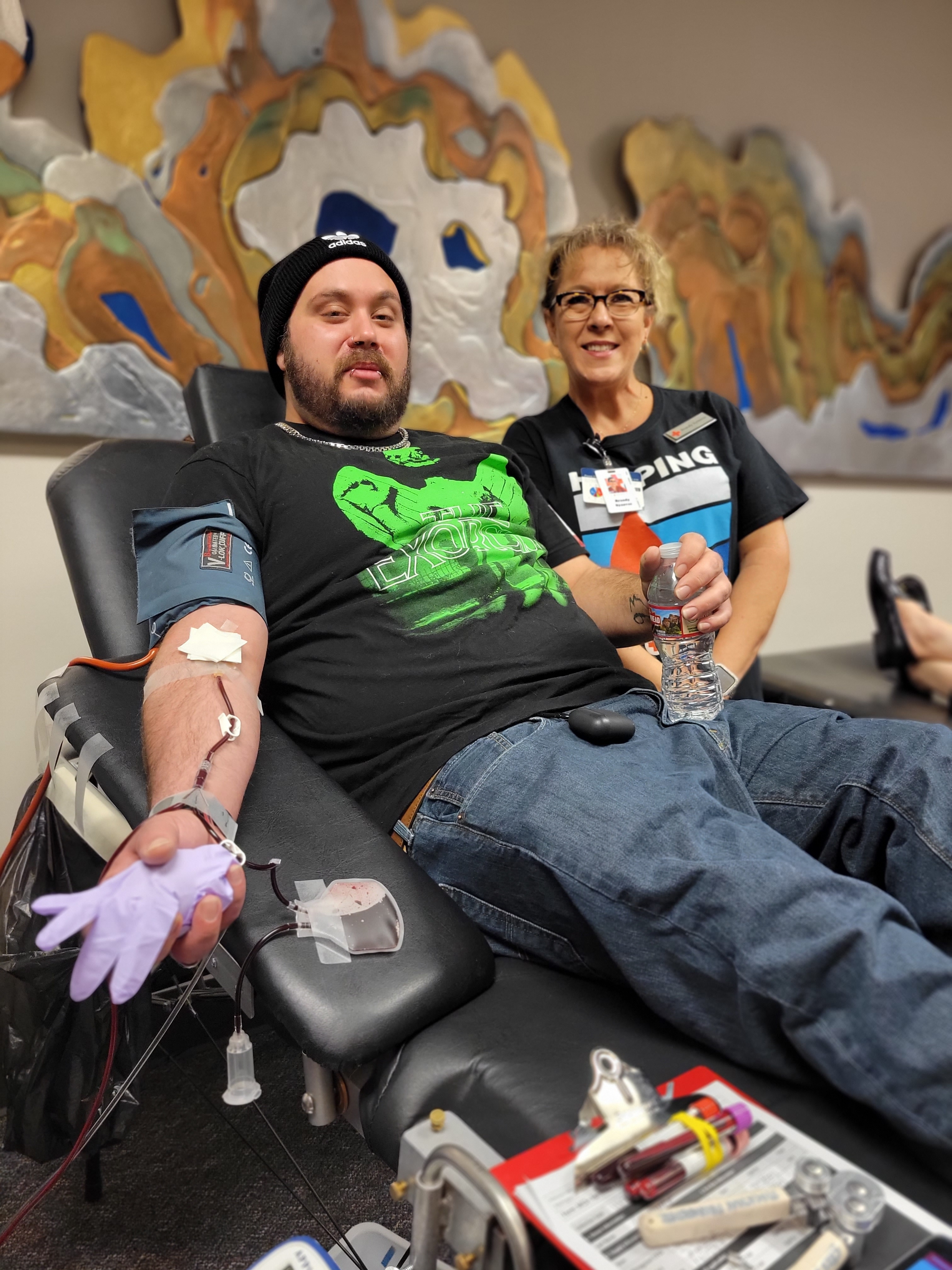
During their recovery, Chuck came up with idea to have the American Red Cross host a blood drive in Katie and Rose’s name. It happened on October 20 at UC Davis Medical Center.

“Chuck was really inspired by both hospitals and their treatment of us,” Katie said, noting that the pair received blood products by way of the Red Cross during their hospitalization. “We wanted to be able to give back. Someone saved us by giving blood, so we could make a difference in somebody’s life. That’s why we hosted the drive.”

Strangers, friends, doctors and nurses were among those who donated blood that day, Katie said.

Today, Katie is celebrating her family’s continued recovery. “We are doing fantastic,” she said. “Rose is making leaps and bounds, racing me up the stairs, dancing. She’s very active.”

“Mentally it’s a lot, going from having the perfect life and a perfectly healthy child to a disabled wife and disabled child,” Katie said. “Chuck has been an absolute rock through all of this. If it wasn’t for him, we wouldn’t be alive.”

The Red Cross is continuously seeking returning and new blood donors. For information on future blood drives in your area, visit redcrossblood.org.

Local Mother of Toddlers Encouraging Blood Donations to Help Sickle Cell Disease Patients

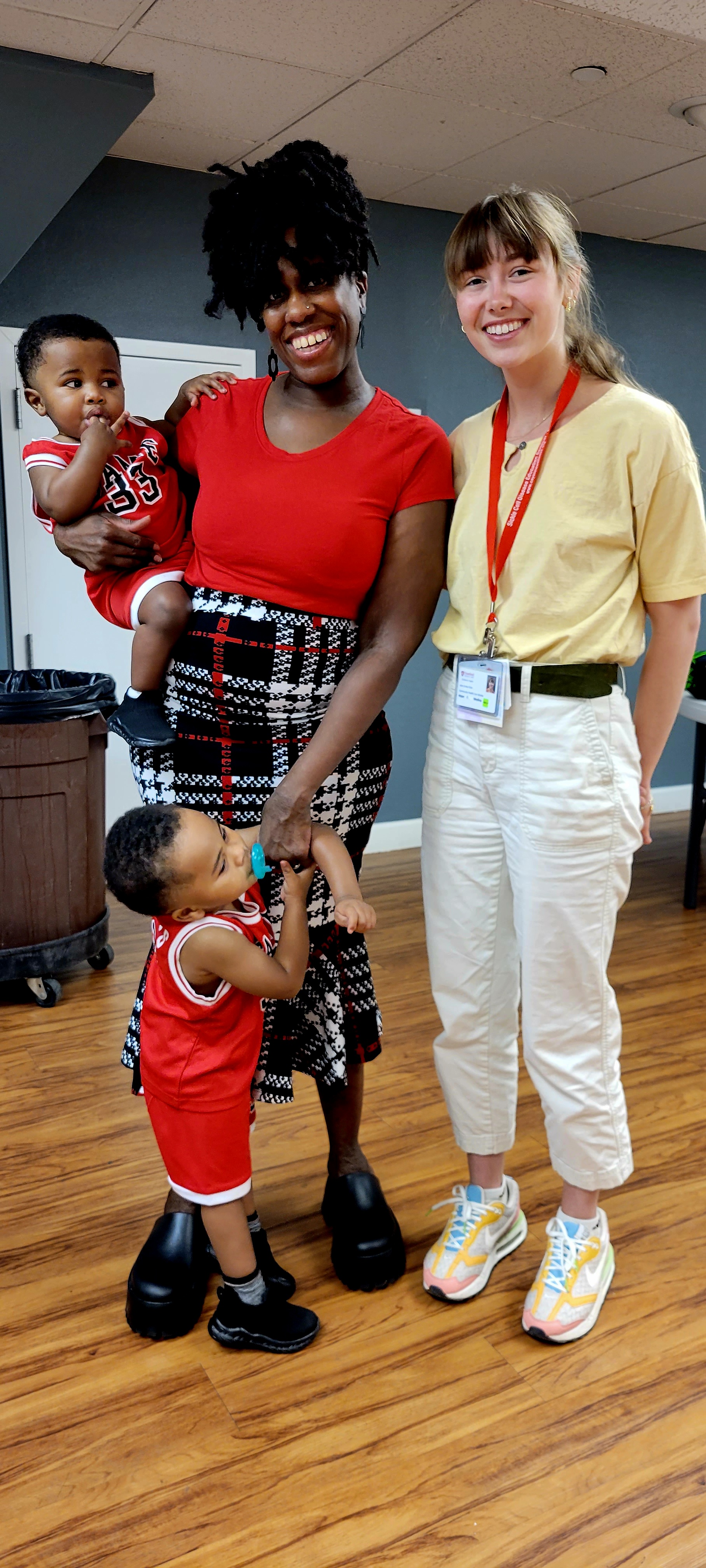
Tashamia Barrow, with her sons, Ike and Isiah, talks to Hope Media of the Cayenne Wellness Center. (Photo by Laurie Puglia)

By Stephen Walsh

A recent American Red Cross blood drive in Sacramento was a special day for Tashamia Barrow and her two young sons. Not only was it to be Tashamia’s first time donating blood, but she was there in support of her two young sons who are dealing with sickle cell disease.

The drive, held in partnership with the Cayenne Wellness Center and the Center of Praise Ministries, was organized to to bring awareness to the Red Cross Sickle Cell Initiative and hopefully find donors whose blood can be used to treat the disease.

Our regional partner SMUD is proud to sponsor the Red Cross Sickle Cell Initiative.

Tashamia said her one-year-old son, Isiah, has full-blown sickle cell disease and her two-year-old son, Ike, has the sickle cell trait but no symptoms. “Knowing what he’s going to go through when he’s getting older – that’s what’s inspiring me to donate, Tashamia said, looking at Ike.

When people donate blood, the blood is tested for specific antigens that are needed to treat sickle cell disease. If the blood contains those characteristics, the Red Cross notifies those donors so they can help sickle cell patients by donating whole blood, plasma, or platelets. 

Learn more about the Red Cross Sickle Cell Initiative here.

“I didn’t know the effect my blood can have. Now that I know, I’m encouraging others to donate to save lives,” Tashamia said, thanking the Cayenne Wellness Center for helping to educate her about the disease.

Visit redcrossblood.org to schedule your blood donation. You can also make a financial donation in support of the Red Cross at redcross.org/donate.

Local Cancer Survivor Encourages Blood Donations as Shortage Continues Nationwide

By Rita Blomster, Communications Volunteer

As the American Red Cross reports its lowest blood supply in a decade, one cancer survivor’s story illustrates the critical importance of blood donations.   

Brittany DeNorscio was diagnosed with leukemia in 2017.  Last month, she told ABC10 in Sacramento that she was thankful for the many anonymous donors who saved her life as she went through chemotherapy, bone marrow transplants and countless blood transfusions. 

Now in remission, DeNorscio wants others to become blood donors.   

“You could be, you know, walking down the street and pass somebody you don’t even know that you saved their life just by donating blood,” she told ABC10.  

Dr. Sarah Barnhard, UC Davis Health Center’s Director of Transfusion Medicine, agrees.   

“There is no other medical therapy that can replace giving blood transfusions to patients,” she told ABC10. “There are a whole host of patients that need blood transfusions in order to survive. They would include everyone from the oncology wards to patients who deliver babies and then have bleeding afterward.  

“Even tiny babies in the intensive care unit oftentimes need to have blood transfusions in order to save their life.” 

The Red Cross must collect about 12,500 blood donations and nearly 3,000 platelet donations every day for hospital patients. All from volunteer donors.

January is Blood Donor Month. To donate blood, simply download the American Red Cross Blood Donor App, visit RedCrossBlood.org, call 1-800-RED CROSS (1-800-733-2767) or enable the Blood Donor Skill on any Alexa Echo device to make an appointment or for more information. All blood types are needed to ensure a reliable supply for patients.  

A blood donor card or driver’s license or two other forms of identification are required at check-in. Individuals who are 17 years of age in most states (16 with parental consent where allowed by state law), weigh at least 110 pounds and are in generally good health may be eligible to donate blood. High school students and other donors 18 years of age and younger also have to meet certain height and weight requirements.  

Blood and platelet donors can save time at their next donation by using RapidPass® to complete their pre-donation reading and health history questionnaire online, on the day of their donation, before arriving at the blood drive. To get started, follow the instructions at RedCrossBlood.org/RapidPass or use the Blood Donor App. 

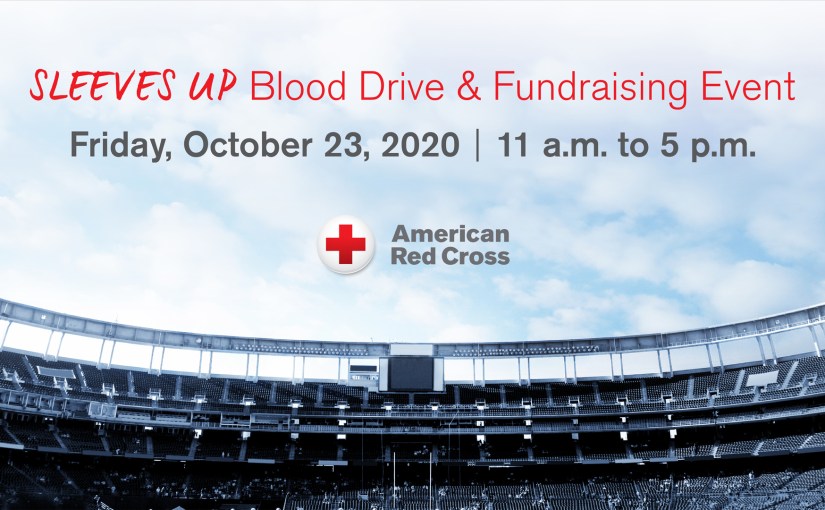
Sleeves Up Blood Drive & Fundraising Event a Great Success

Thank you to all the blood donors who made Friday’s Sleeves Up Blood Drive and Fundraising Event a success!

We collected 75 units of blood at Sutter Health Park, home of the Sacramento River Cats. That amount can potentially save 225 lives!

A special thanks to our sponsors, including Sutter Health, Hard Rock Hotel and Casino Sacramento, Reliable GMC, Port of Stockton, UC Davis Health and SMUD.

If you want to register to donate blood — including at our Nov. 5 blood drive with the Sacramento Kings, visit redcrossblood.org. Text SLEEVESUP to 41411 to support this critical lifesaving work with a financial contribution.

Fully Recovered from Covid-19? You May Be Eligible to Help Others

The American Red Cross is seeking people who are fully recovered from #COVID19 and may be able to donate plasma to help current patients with serious or immediately life-threatening COVID-19 infections.

Learn more here: RedCrossBlood.org/plasma4covid

what-is-convalescent-plasma-fb

Red Cross to Healthy Individuals: Give Blood Amid Coronavirus Concerns

(March 10, 2020) – The American Red Cross strongly urges healthy, eligible individuals who are feeling well to give blood or platelets to help maintain a sufficient blood supply and prevent shortages as concerns about the outbreak of coronavirus disease 2019, or COVID-19, rise in the U.S.

Cold and flu season has already impacted the nation’s ability to maintain its blood supply. As the number of coronavirus cases grows in the U.S., the number of people eligible to give blood for patients in need could decrease further.

“We’re asking the American people to help keep the blood supply stable during this challenging time. As communities across the country prepare for this public health emergency, it’s critical that plans include a readily available blood supply for hospital patients,” said Chris Hrouda, president, Red Cross Blood Services.

“As fears of coronavirus rise, low donor participation could harm blood availability at hospitals, and the last thing a patient should worry about is whether lifesaving blood will be on the shelf when they need it most.”

Please make an appointment to donate blood now by using the Red Cross Blood Donor App, visiting RedCrossBlood.org, calling 1-800-RED CROSS (1-800-733-2767) or enabling the Blood Donor Skill on any Alexa Echo device. Blood donors with type O blood and platelet donors are especially needed right now.

Donating blood is a safe process and people should not hesitate to give or receive blood. There are no data or evidence that this coronavirus can be transmissible by blood transfusion, and there have been no reported cases worldwide of transmissions for any respiratory virus, including this coronavirus, from a transfusion.

The Red Cross only collects blood from individuals who are healthy and feeling well at the time of donation – and who meet other eligibility requirements, available at RedCrossBlood.org.

At each blood drive and donation center, Red Cross employees follow thorough safety protocols including wearing gloves, routinely wiping down donor-touched areas, using sterile collection sets for every donation, and preparing the arm for donation with an aseptic scrub.

These mitigation measures will help ensure blood recipient safety, as well as staff and donor safety in reducing contact with those who may potentially have this respiratory infection.

Blood drive hosts play important role
Blood drive hosts also play a critical role in maintaining a sufficient blood supply and are asked to keep hosting blood drives for patients who rely on lifesaving blood. The need for blood is constant, and volunteer donors are the only source of blood for those in need of transfusions.

The Red Cross, with the help of its blood drive hosts and blood donors, can help ensure the safety and availability of the U.S. blood supply for patients including accident and burn victims, heart surgery and organ transplant patients, and those receiving treatment for leukemia, cancer or sickle cell disease.

“Keep giving, keep hosting blood drives,” said Hrouda. “Patients across the country need our help.”

To learn more about hosting a blood drive for patients in need, please visit RedCrossBlood.org.

Red Cross committed to blood supply safety

The top priority of the Red Cross is the safety of our valued staff, blood donors and blood recipients, and we are committed to transparency with the American public during this evolving public health emergency.

There are no data or evidence that this coronavirus can be transmissible by blood transfusion, and there have been no reported cases worldwide of transmissions for any respiratory virus including this coronavirus, from a transfusion.

Nonetheless, the Red Cross has implemented new blood donation deferrals out of an abundance of caution. Individuals are asked to postpone their donation for 28 days following:

  • Travel to China and its special administrative regions, Hong Kong and Macau, as well as Iran, Italy and South Korea;
  • Diagnosis of COVID-19, contact with a person who has or is suspected to have the virus.

As the situation evolves, the Red Cross will continue to evaluate all emerging risks in collaboration with the U.S. Food and Drug Administration, Centers for Disease Control and Prevention and industry partners to determine if additional intervention strategies are needed. Together, we stand ready to keep the American public informed and prepared.

Blood donation process

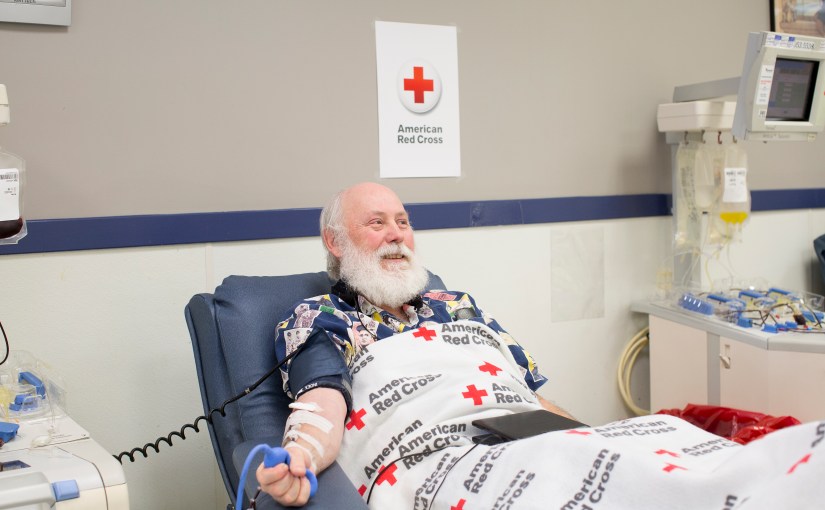
A blood donation takes about an hour from start to finish, but the actual donation itself only takes about 8-10 minutes. Donors can also save up to 15 minutes at the blood drive by completing a RapidPass®. With RapidPass®, donors complete the pre-donation reading and health history questionnaire online, on the day of donation, from a mobile device or computer.

To complete a RapidPass®, follow the instructions at RedCrossBlood.org/RapidPass or use the Red Cross Blood Donor App.

To donate blood, individuals need to bring a blood donor card or driver’s license or two other forms of identification that are required at check-in. Individuals who are 17 years of age in most states (16 with parental consent where allowed by state law), weigh at least 110 pounds and are in generally good health may be eligible to donate blood.

High school students and other donors 18 years of age and younger also must meet certain height and weight requirements.

About the American Red Cross

The American Red Cross shelters, feeds and provides emotional support to victims of disasters; supplies about 40% of the nation’s blood; teaches skills that save lives; provides international humanitarian aid; and supports military members and their families. The Red Cross is a not-for-profit organization that depends on volunteers and the generosity of the American public to perform its mission. For more information, please visit redcross.org or cruzrojaamericana.org, or visit us on Twitter at @RedCross.


Meet Stockton Blood Services Ambassador Dennis Saxton

Saxon

Life-long Stockton resident Dennis Saxton began serving blood donors 17 years ago. During his very first volunteering shift, three people passed out! “I almost didn’t come back,” said Dennis, “but I’m glad that I did. Since then, I have met a lot of people I like to call friends.” Dennis thoroughly enjoys spending time with his friends, so much so that, he schedules three regular shifts per week and will come in on a moment’s notice to fill in when needed.  

Dennis enjoys the front desk, signing donors in and answering their questions. Dennis moonlights as a trainer and has helped numerous new volunteers learn the subtleties of reception work. With his easy sense of humor, Dennis shines in the Canteen. “I like to meet people and I like to talk,” he ways. But Dennis also understands the serious side of the Canteen.  “You have to pay attention to what’s going on around you. We are here to serve the donors.”