Parents’ Gratitude for Blood Donors Highlights Summer Need

donate_blood_rotator_0

The American Red Cross has recently been in extra need of blood donors; the impact of blood donors has always proved instrumental in saving lives. As blood donations continue to decline this summer, the American Red Cross asks eligible donors to remember patients who are counting on the generosity of volunteers to roll up a sleeve and give. Without lifesaving blood, patients like 3-year-old Emily Stephenson wouldn’t be alive to share their stories.

Emily’s Story

Emily was only a few days old when her parents, Amy and Wayne Stephenson, learned she had a genetic blood disorder which causes severe anemia. To remain healthy, Emily will require blood transfusions every six to eight weeks until she is at least 10 years old. She’s already received blood more than 30 times.

“Blood donation is the bridge between life and death for Emily, but it is also so much more,” said Amy Stephenson. “It is learning to ride a bike, going to her first dance, earning a diploma and walking down an aisle someday.”

The Red Cross partnered with the Stephenson family in a special video to put a face on the importance of blood donation. In the video “Emily’s Story: A Letter from Mom and Dad,” the Stephensons want to express eternal gratitude for those who roll up a sleeve to help Emily live.

“The process of donation may appear to be filled with anonymity, but we see a name in every unit Emily receives during a transfusion,” said Amy Stephenson. “While we do not know the donor, we can see your heart and we appreciate you.”

Emily is one of many individuals who are in urgent need of blood; one donor can potentially save up to three lives from just one pint of blood.

The Red Cross has an urgent need for eligible blood donors with types O negative, B negative and A negative blood to give now to prevent an emergency situation. Type O negative is the universal blood type and can be transfused to patients with any blood type. Types A negative and B negative can be transfused to Rh positive or negative patients. Individuals with these blood types are urged to make and keep donation appointments as soon as possible to help replenish the blood supply.

Platelet donors and those with type AB blood are also continually needed to help ensure the shelves are stocked for patients in need. Platelets – a key clotting component of blood often needed by cancer patients, surgical patients and bone marrow recipients – must be transfused within five days of donation, so donations are always needed. Donors with type AB blood are urgently needed to restock the plasma supply. Type AB donors have the universal plasma type, which can be given to patients of all blood types.

Plasma is often needed for burn, trauma and clotting deficiency patients. Plasma can be collected during a blood or platelet donation.

Everyone is encouraged to give blood or platelets to help patients like Emily and replenish the blood supply. For more information or to schedule an appointment to donate blood, call 1-800-RED CROSS (1-800-733-2767) or visit redcrossblood.org. Donors can also use the Red Cross Blood Donor App, which is free and available for download now. It can be found in app stores by searching for American Red Cross, visiting redcross.org/apps or redcrossblood.org/bloodapp, or by texting BLOODAPP to 90999 for a direct link to download.

If you would like to donate in the Gold Country Region, visit Delta Blood Bank for information of when and where to donate.
Red Cross Renews Memorandum of Agreement with FEMA

Red_Cross_FEMA_Image

The American Red Cross has renewed its Memorandum of Agreement (MOA) with the Federal Emergency Management Agency (FEMA). The MOA is aimed at defining the overarching goals of the relationship between the two organizations. The Red Cross and FEMA last signed an MOA in 2010. The 2010 MOA focused on the collaboration between the two organizations in coordinating and delivering mass care services during disaster responses, and specifically on the Red Cross role as co-lead for mass care portion of Emergency Support Function-6, one of 15 Emergency Support Functions identified in the National Response Framework.

Since 2010, both FEMA and the Red Cross have enhanced their perspective to include all phases of the disaster cycle. In 2011, President Obama signed Presidential Policy Directive 8, which tasked FEMA with coordinating the production of National Planning Frameworks across the disaster cycle, including prevention, protection, mitigation, response, and recovery. In 2012, the Red Cross undertook a business process reengineering effort that resulted in alignment of its disaster preparedness, response, and recovery mission areas.

While the MOA still addresses the Red Cross co-lead role in Emergency Support Function-6, it also recognizes the important role the Red Cross plays in other Emergency Support Functions, Recovery Support Functions, and preparedness functions.

“This renewed MOA is a great reflection of Disaster Cycle Services and the goals and vision we set with re-engineering,” said Richard Reed, Senior Vice-President for Disaster Cycle Services.  “Working together with FEMA, we expanded our agreement to ensure our partnership covered the entire disaster cycle.  And we now have an agreement that is not only more strategic in nature but also speaks to the specifics of how our two organizations work together in preparedness, response and recovery.”

The MOA can be found on the Government MOU Index on The Exchange.  Contact the Emergency Management Coordination unit with questions.

What to Do If a Wildfire Threatens

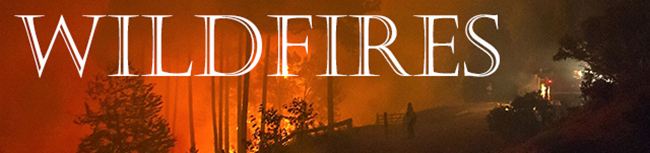
Wildfires-Header-jpgWildfire season has been a year-round threat in California due to the extreme four-year drought. According to the National Interagency Coordination Center (NICC), almost 20 large fires are burning now and more than 100 new fires have been reported.

The American Red Cross is helping people impacted by several fires burning in the Golden State and offers safety tips on how to better protect yourself and your loved ones from a wildfire.

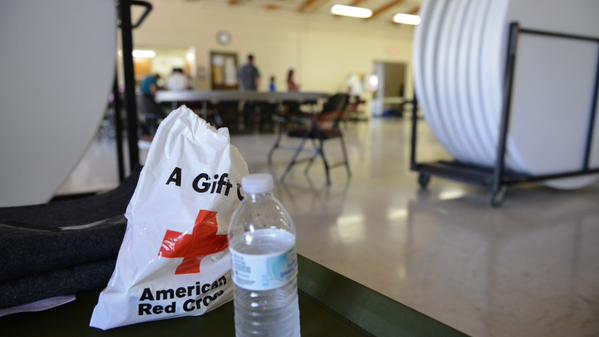
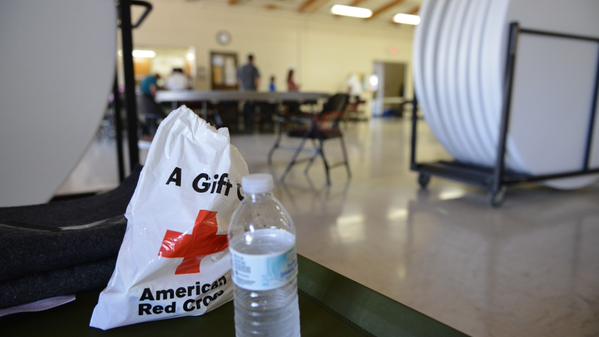
Currently, the Gold Country region alone has been operating two shelters in Trinity County due to the Mad River Complex Fires and the Fork Complex Fires.

WILDFIRE SAFETY

  • Learn about wildfire risks in your area or the region where you are planning to vacation.
  • Download the free Red Cross Emergency App to learn more about wildfires and set up alerts.
  • Talk with members of your household about wildfires – how to prevent them and what to do if one occurs.
  • Select a place for family members to meet outside your neighborhood in case you cannot get home or need to evacuate.
  • Identify someone who is out of the area to contact if local phone lines are not working.
  • Post emergency numbers by every phone, or enter them into your cell phones.
  • Make a plan and practice it. Plan and practice two ways out of your neighborhood or vacation area in case your primary route is blocked.
  • Firewood should be stacked at least 30 feet uphill from your home or camping spot. Clear combustible material within 20 ft. of the stack. Fire tends to travel uphill, so keep highly combustible firewood and other materials above your home or vacation area.

IF A WILDFIRE THREATENS

  • Be ready to leave at a moment’s notice.
  • Listen to local radio and television stations for updated emergency information.
  • Always back your car into the garage or park it in an open space facing the direction of escape.
  • Confine pets to one room or spot so that you can find them if you need to evacuate quickly.
  • Arrange for temporary housing at a friend or relative’s home outside the threatened area.
  • Keep indoor air clean by closing windows and doors to prevent outside smoke from getting in.
  • Use the recycle or re-circulate mode on the air conditioner in your home or car.
  • When smoke levels are high, do not use anything that burns and adds to indoor air pollution, such as candles, fireplaces and gas stoves.

DOWNLOAD EMERGENCY APP

The free Emergency App is highly customizable and informative with alerts, vital emergency information and a “Family Safe” feature to notify loved ones that an alert has been issued in their area and check to see if they are safe. Find it in your app store by searching for American Red Cross.

HOW TO HELP

Become a volunteer or make a donation to Red Cross Disaster Relief. Your donations can help provide shelter for someone who has had to leave their home and food and water for them to eat. Help people affected by disasters like wildfires, earthquakes, floods, tornadoes and countless other crises by making a gift to Red Cross Disaster Relief. Your gift enables the Red Cross to prepare for, respond to and help people recover from disasters big and small. To donate, people can visit www.redcross.org, call 1-800-RED CROSS (1-800-733-2767) or text REDCROSS to 90999 to make a $10 donation.

Red Cross Responds to Multiple Wildfires Throughout Northern California

A large flare-up from the Wragg Fire is seen in a photograph taken in rural Solano County, California on July 28, 2015. (Photo credit: Matthew Keys)

SACRAMENTO, CA (July 31, 2015) The American Red Cross Gold Country Region has spent the last several days responding to multiple wildfires throughout Northern California.  Thankfully, we’re ready to respond at a moment’s notice and we are prepared for what could be one of the worst wildfire seasons  that California has experienced.

“We know this is just a sneak peek into how bad the fires could be this season” said Lilly Wyatt, American Red Cross Communications Director. “With the extreme drought we’ve been experiencing for four years, we know the threat is there and we are ready to respond and assist our community.”

WRAGG FIRE
The Wragg Fire, which began on Wednesday, July 22, forced multiple evacuations around Solano and Yolo Counties. The Red Cross set up an evacuation center at the Winters Community Center, 201 Railroad Ave, Winters, CA, where evacuated residents can received lodging, meals, comfort and information. We accommodated five residents overnight, but had more than 20 fluctuating throughout the day as residents come and go.

KYBURZ FIRE
Thursday July 23, more Red Cross volunteers were called into action to set up an evacuation center at the Pollock Pines-Camino Community Center, 2675 Sanders Drive, Pollock Pines, CA. for resident impacted by the Kybrurz Fire, which closed both directions of Highway 50. We

LOWELL FIRE
The Lowell Fire at the Nevada/Placer county lines exploded just as the Kyburz Fire was easing on Saturday, July 25 around 3pm. We opened a shelter in Grass Valley to support Nevada Country residents.  Eleven residents stayed at the shelter overnight and another 15 persons staying in the parking lot of the High School in camper’s cars and motorhomes.  Red Cross provided breakfast, lunch, dinner and snacks to 25 people while the shelter was opened.

SWEDE’S FLAT FIRE
​In the morning of Wednesday, July 29 another wild land fire erupted, this time in Butte County. Local government requested the Red Cross to set up an Evacuation Center and we were able to have it available within a couple of hours at the Church of the Nazarene in Oroville CA. The evacuation center quickly transitioned into a full shelter to house seven individuals overnight.

CHINA, HAPPY AND MALLARD FIRES
Three different blazes sparked in Shasta County the evening of July 29. Although small in acreage they were threatening multiple homes and the Red Cross established a shelter at Anderson High School.

BIG CREEK FIRE
Also on July 29 a vegetation fire in the Groveland Area of Tuolumne County began burning heavy timber. The fire spread quickly and 65 homes were evacuated. At 8:00pm, Red Cross staff and volunteers established the evacuation center at Groveland Community Hall to have it ready for those who needed a comfortable place to rest.

In 2014, we responded to dozens of wildfires, more than ever before and 2015 is shaping up to be as bad as last year,” said Wyatt. “From July 1 to the end of September we had at least one shelter open except for just 18 hours.”

BE PREPARED
The Red Cross urges communities throughout California to get prepared for what will likely be a long and severe wildfire season. The Red Cross urges residents to follow all evacuation orders from local enforcement and be prepared for disasters like wildfires. All families should have an emergency game plan for disasters large and small. Make sure your home has an emergency kit ready to go at a moment’s notice.

Click here to learn more about preparing for and responding to wildfires.

HOW TO HELP
Become a volunteer or make a donation to Red Cross Disaster Relief. Your donations can help provide shelter for someone who has had to leave their home and food and water for them to eat. Help people affected by disasters like wildfires, earthquakes, floods, tornadoes and countless other crises by making a gift to Red Cross Disaster Relief. Your gift enables the Red Cross to prepare for, respond to and help people recover from disasters big and small. To donate, people can visit www.redcross.org, call 1-800-RED CROSS (1-800-733-2767) or text REDCROSS to 90999 to make a $10 donation.

Courtesy of Wayne Freedman @WayneFreedman

Service to the Armed Forces Reconnection Workshop

Author: Fatima Yusuf (Summer Intern)

When soldiers return home, they can have a a joyous yet, sometimes a stressful time adjusting to their new life after service. While most military families are excited to see their beloved ones return from deployment, many are faced with the challenges of rebuilding relationships within their homes and community.

The American Red Cross in partnership with Walmart has been providing “Reconnection Workshops” for military families allowing for positive reunions for military families and their returning deployed military loved ones.

The workshops are free and are run by actively licensed and specially trained Red Cross mental health volunteers. Topics that are discussed include: managing anger, supporting children, post traumatic stress disorder, building communication, and other topics critical to reunion adjustment. This workshop is a complement of the “Red Cross Coping with Deployments: Psychological First Aid for Military Families” program which focuses on building resiliency and coping with challenges of the deployment cycle. Both programs have shown a remarkable amount of progress in providing service members and their families a tool to grow in terms of their relationships. The workshop in all it’s glory demonstrates how a positive environment to communicate can lead a long way in comforting our service members as they return back to their beloved homeland.

Tobrin Hewitt, Service to the Armed Forces Program Manager of the American Red Cross Gold Country Region shared his perspective on the program in an interview:

  1. Why is the “Reconnection Workshop” a program families should consider during the return of deployed military family members?

“A lot of service members return home from deployments and successfully readjust to their lives and within their community; however, some solders have a harder time transitioning back from the high tempo of a deployment. Some of the challenges that service members face include readjusting to their partners, engaging children, redefining the family routine, and managing health problems that can be present after deployment.”

  1. What is the most rewarding part of the program for most families?

“The tools that service members gain from these workshops which are instrumental in rebuilding positive relationships with their own families and society.”

  1. How is the program usually run and what can attendees expect from a session?

“The workshops are small groups (3-12) and they are 90 minutes long. One of five topics that will be discussed will be selected based on the needs of the individual group during each specific workshop session. Some important topics include communicating clearly, exploring stress and trauma, identifying depression, relating to children, and working through anger.”

  1. Is there anything crucial that the attendees should consider or prepare for before they attend a session?

“The workshops are geared towards participation so including service members personal experiences helps towards the overall effectiveness of the workshop.”

The workshop is available to all service members and their family members interested in seeking post-deployment support.

For more information visit our website or contact SAF Manager Tobrin Hewitt.

Three Months Later: Red Cross Recovery Efforts Ongoing in Nepal

RC in Nepal


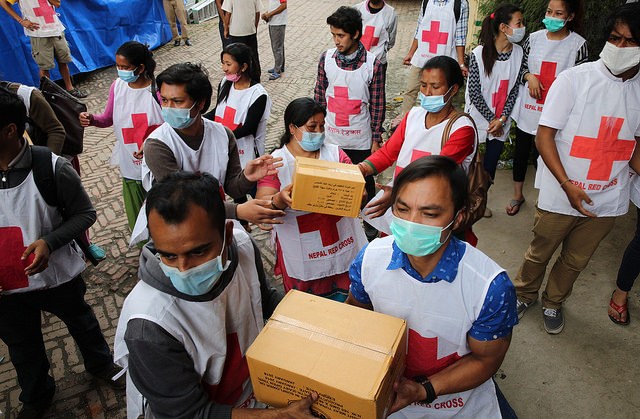
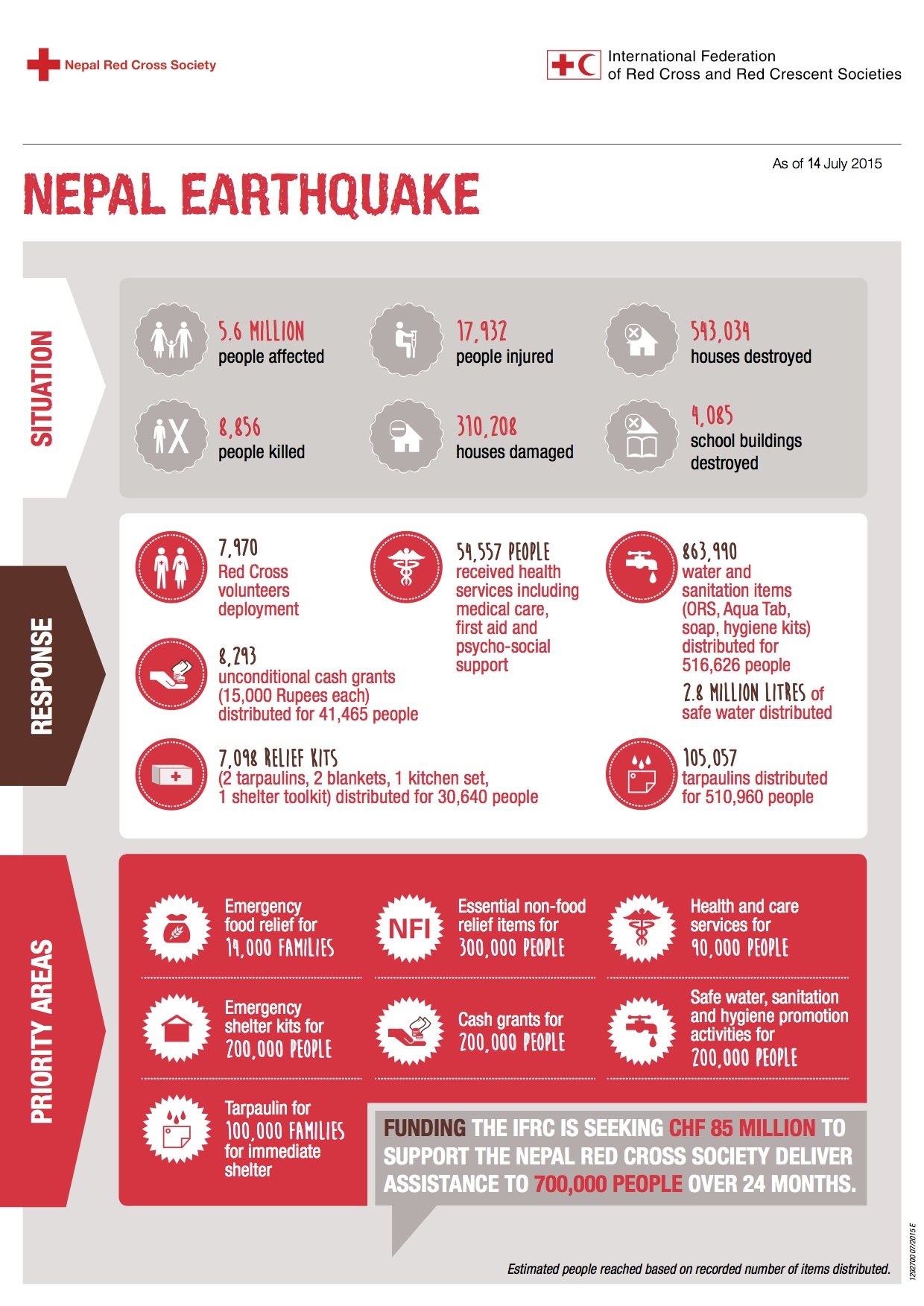
Three months have passed since the devastating earthquake rocked Nepal and its aftershocks shook surrounding locations. The Red Cross is still there providing relief and helping to rebuild.

On April 25, 2015 Nepal was severely impacted by a 7.8 magnitude earthquake, which took the lives of many and left others homeless and in a state of helplessness.

ifrc-nepal-earthquake-infographic
Click the Infographic to enlarge

5.6 million people were affected, and of that number 17,932 people were injured and 8,856 people were killed. On top of the loss of lives 543,034 houses were destroyed.

To date nearly 8,000 Red Cross volunteers and staff have been deployed, and more than $13.6 million have been spent or committed to emergency relief and shelter and cash distribution.

With generous support and donations we have provided health services including medical care, first aid and psychosocial support; we’ve distributed more than 2.8 million liters of safe water, and more than 7,000 relief kits and hygiene kits have been distributed to Nepal survivors.

 This natural disaster was one of the largest to strike Nepal since 1934, and we will continue to do all that we can to assist with the restoration and rebuild of Nepal. Our primary areas of focus are food, water, shelter, health care and cash grants.

We are confident that we can extend our hand to aid in relief efforts.

Read some of the stories of the people impacted by this disaster: http://rdcrss.org/1E3Hjiy


A Family’s Plea to Prepare for a Home Fire

On Monday, February 23, 2015, little Sawyer White passed away when his Belleville home caught fire. A week and a half after the heartbreaking loss, Sawyer’s parents contacted the American Red Cross to get involved in the Home Fire Preparedness Campaign and participate in an upcoming smoke alarm install project that would be happening in their community.
On Saturday, March 14th, Danielle and Chris White worked with Char DeWitt, Gift Planning Officer and Kim Brown, volunteer/donor to install and educate families. The team of four joined 41 volunteers to install nearly 100 lifesaving smoke alarms replace batteries in current alarms.

Danielle and Chris said it is important for others to hear their story and to be part of the campaign because they are a “young family” and never prepared for a home fire. They are hopeful that by sharing their story, others will prepare.

Since the Gold Country Region launched the Home Fire Preparedness Campaign we have installed more than 1300 smoke detectors in and around the 24 county region. 

American Red Cross Urges Safety During Warm Weather

heat waveSacramento, CA., Tuesday, July 28, 2015-  We are expecting another heat wave that could reach the high triple-digit temperatures in the coming week. The American Red Cross is urging residents to use caution when venturing out into the hot weather. “We all want a summer to remember,” said Lilly Wyatt, American Red Cross Gold Country spokesperson. “Those memories can be pleasant by following simple tips to stay cool.”

The American Red Cross recommends following these simple rules when participating in outdoor activities during the warm Sacramento weather:

  • Dress for the heat. Wear lightweight, light-colored clothing
  • Drink water. Carry water or juice and carry it with you and drink continuously even if you do not feel thirsty. Avoid alcohol and caffeine, which dehydrate the body.
  • Eat small meals and eat more often. Avoid foods that are high in protein which increase metabolic heat.
  • Avoid using salt tablets unless directed to do so by a physician.
  • Avoid strenuous activity.
  • Stay indoors when possible.
  • Take regular breaks when engaged in physical activity on warm days.

HeatGuyThe American Red Cross also urges residents to take cautionary measures in recognizing heat-related illnesses:

  • Heat Cramps: Get the person to a cooler place and have him or her rest in a comfortable position. Lightly stretch the affected muscle and replenish fluids. Give a half glass of cool water every 15 minutes. Do not give liquids with alcohol or caffeine in them as they can make conditions worse.
  • Heat exhaustion: Get the person out of the heat and into a cooler place. Remove or loosen tight clothing and apply cool, wet cloths. If the person is conscious, give cool water to drink. Give a half glass of water every 15 minutes. Let victim rest in a comfortable position, and watch carefully for changes in his or her condition.
  • Heat stroke: Heat stroke is a life threatening condition and help is needed fast. Call 911 or your local emergency number. Move the person to a cooler place. Quickly cool the body by immersing the victim in a cool bath or wrap the victim in wet sheets while fanning him or her. Watch for signals of breathing problems and keep the person lying down while continuing to cool them any way you can. If the victim refuses water, is vomiting or there are changes in level of consciousness, do not give anything to eat or drink.

Call the American Red Cross Gold Country Region at (916) 993-7070 to register for First Aid and CPR/AED courses or register at http://www.redcross.org/GoldCountry today.

For more information on local Red Cross programs and services, visit our website, or follow us on Twitter and Facebook.

Clara Barton For #TheNew10

Clara-Barton
Clara-Barton


The U.S. Department of the Treasury recently announced a redesign of the ten-dollar bill, to include a notable woman as the new face of the bill. Many minds at the Red Cross jumped immediately to our founder, Clara Barton. Here is a brief summary of who she was!

Barton is one of the most honored women in American history. She was a schoolteacher and also one of the first women to work for the federal government.

Clara-Barton
Clara-Barton

Risking her life, Barton offered support, food and supplies to soldiers who were fighting in the Civil War. In 1870, during the Franco-Prussian War, Barton used her expertise to help distribute relief supplies and set up stations where work could be done.

On May 21, 1881, Barton and a group of like-minded individuals founded the American Association of the Red Cross, and she led it for 23 years! The Red Cross received its first congressional charter in 1900 and a second in 1905.


Since then Barton published several books pertaining to the American Red Cross. She had a special interest for things that would promote a better future for all like education, prison reform, women’s suffrage, civil rights, and even spiritualism.


Barton has contributed so much to so many, and her devout love for humanity along with her willingness to serve others was revealed time and time again through her actions, and resulted in enough achievements to fill several ordinary lifetimes.


For more information on the history of Clara Barton visit, http://rdcrss.org/1jMbimy

A Full Circle Moment

Thanks to Fox40 for sharing the work that we do at the American Red Cross and thanks to the Girl Scouts for putting extra love in making the kits.

We would like to share this special ‘full circle moment” that showcases how our work is impacting people every day.

Email from Jennifer Loncaric
Subject: What we do works. 

“I thought you might like this. That’s a note my daughter wrote when she helped make comfort kits with Jasmine a few months ago. The girl holding it was also there helping that day. She is Trina’s (my co-leader) step-daughter. Their house was burnt early Sunday morning after a mortar hit the front porch. We don’t know how long they will be displaced, but the Red Cross visited them today with some help. It’s a beautiful thing to see the joy on her face from something so small in such a tragic time for her family. I am overwhelmed with emotion knowing my girls have had such a local and personal impact.”

Thanks to the kind efforts of local girl scout troops, many families struck by home fires have received useful Red Cross Comfort Kits during such a stressful time in their lives. Jasmine Su an HSS instructor and Girl Scout troop leader helped to create these kits through the help of her troops. Here is a picture of one of her troop members holding a very heartfelt message which was addressed to the family that suffered from the tragedy.

We take much pleasure in sharing this moment to demonstrate the positive support of these young ladies during times of stress.