
After the Camp Fire swept through his hometown of Magalia, California, Ken Kupstas wasn’t sure what shape his home was in. He had been out running errands and couldn’t get back into the town.
Firefighters found his dog of 14 years, a Chihuahua named Precious at home, but she was beyond help, so Ken had to do the one thing he didn’t want to do.
“It was hard to give her up, but I didn’t want my little girl to suffer, I really didn’t,” the 82-year-old widower said. “She was my best friend, and I had to do what was best for her.”
 Ken knew his home was there but didn’t how bad it might have been damaged until a friend showed him a video on a smartphone of his neighborhood. He stared intently until he finally saw his home, intact and still standing.
“There it is, there it is,” he said excitedly as he watched outside a Red Cross shelter in Chico where he’s staying. “Oh my, it’s still there.”
Nearby, Holly Cristofaro, a Red Cross mental health counselor at the shelter who had talked to Ken before, heard the news and rushed over to hug him.
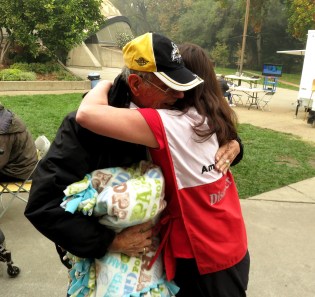 “Oh, what a relief for you,” Holly said to Ken as he fought back the tears and smiled. “This is so nice to hear.”
As they parted, Holly said, “We still want to be here for you.”
Holly, a social worker in Boston, explained that often after people have been through an ordeal like waiting to hear about the fate of their home, the feelings of physical exhaustion start catching with them.
She said while Ken got some good news. Still, he’s like so many others going through the ordeal of loss and not sure about the future.
“You support them and let them tell their story, let them share. It can mean a lot to them to have someone listen to what they’ve gone through,” Holly said.
Those who escaped the wildfire are faced with an array of feelings.
Holly said many are dealing with their initial fears of not surviving and recalling the heat as they fled. Others are feeling bad about having to leave their pets because they only had a few minutes to get to safety and many pets ran away in a panic.
Then there is the feeling of gratitude for being alive, tempered by not knowing what is going to happen next.
Holly said many of those she has talked with have shown so much resiliency and determination to overcome the adversity.
“It’s a good sign of being able to recover,” Holly said.
For Ken, all those feelings have become part of his life, and while the future may be uncertain, he’s ready to face it.
“I believe things will get better, I really do,” he said. “I’ve been a fighter all my life. I’m too ornery to give up.”
To reach out for free 24/7 counseling or support, contact the Disaster Distress Helpline at 1-800-985-5990 or text “TalkWithUs’ to 66746.
Story and photos by Carl Manning, American Red Cross volunteer


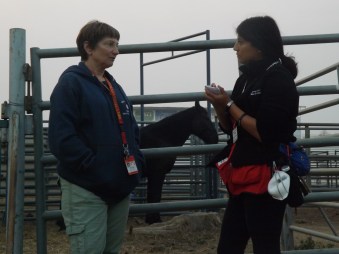 The North Valley Animal Disaster Group (NVADG) continues taking in livestock and is working with the UC Davis Veterinary Emergency Response Team, as well as the Birch Valley Ranch Equestrian School, to provide the animals with shelter and medical attention.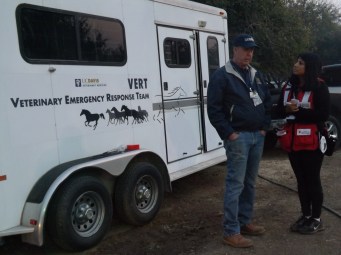
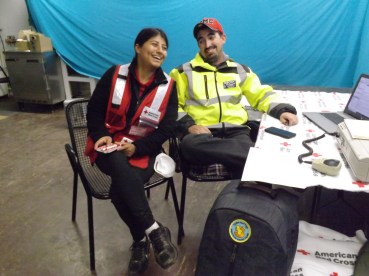


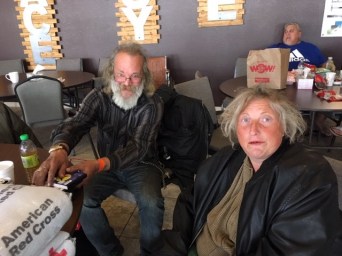
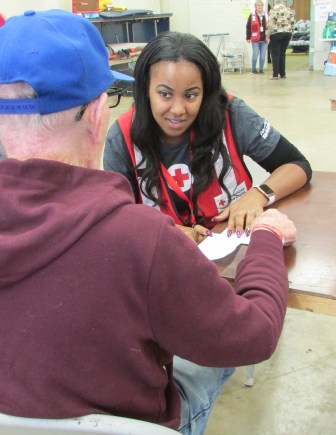 “What we find in those who seek refuge in our Red Cross shelters are those who have no other place to go,” explained Steve Clavere, Mental Health Lead for the American Red Cross. Clavere and his fellow mental health volunteers are serving evacuees at all of the Red Cross shelters in the area. “We see folks who are dazed, in shock and at a loss as to what to do next.”
 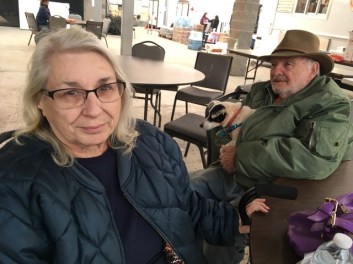 Mr. Driver spoke to me as Brandy snuggled in his jacket on this chilly afternoon at the Red Cross shelter, at the Church of the Nazarene, in Oroville. Mr. Driver proudly announced that Brandy is a “working dog,” not officially trained, but still, she’s a worker. Mr. Driver has blood sugar issues and Brandy wakes him up when she senses that Mr. Driver’s sugar levels are off.

 Gold Country News and Notes