Henry Braxton was among the first to assist the American Red Cross when he and his neighbors were caught in the path of rising water in the Natchez, Louisiana, area. Every day for nearly a week, he did whatever he could do to lend a hand, from helping to distribute cleanup kits to showing volunteers flood-damaged areas.
“The Bible says put my hometown first and put myself last, and I think God will bless me for that,” Henry said one recent evening at the Morning Star Baptist Church in Natchez, where the Red Cross offered hot meals, cleanup supplies, emotional support and casework assistance.
He was among dozens who attended, but he wasn’t there to seek help. Rather, he assisted people carrying cleanup supplies and other items to their vehicles.
Inside the church, Henry reached into his pocket and pulled out a Red Cross challenge coin that he received for his efforts—a coin that few receive and even fewer have ever seen. When he displayed the coin, it was obvious to Red Cross volunteers that Henry was a person who had been singled out for recognition.
“It was a high honor and brought tears to my eyes. I was just doing the best I could to help the people needing help,” he said.
Henry, a big man with rippling muscles and an infectious smile, said his late mother raised him to be kind to others and to go to church. To honor her, Henry said his philosophy is simple: “Any way I can help out, I will.”
As he talked, it was clear that Henry deserved more than the thanks of a grateful Red Cross. Henry said he hadn’t signed up with the Red Cross for help, and with that, he
Jeremiah Norrell, a volunteer from Sacramento assisting Henry in Louisiana
was introduced to Jeremiah Norrell, a Red Cross Jeremiah Norrell, a Red Cross caseworker from the Sacramento, California area. Henry explained how he had lost his refrigerator, stove and furniture to rising water, which soaked his floors. Yet he hadn’t asked for anything.
Henry indeed qualified for Red Cross immediate assistance, as he and Jeremiah together checked a map to see that his home was in a flooded area. He was eligible for supplemental Red Cross assistance and in position to be referred to various partner agencies for things such as clothing and furniture.
As he left, Henry stopped and hugged volunteers who helped him get assistance. When he walked out the door, he turned around, waved and smiled before disappearing into the night.
As you know, our friends and neighbors in Amador and Calaveras counties endured a relentless series of devastating wildfires this past summer. Today, our work continues, where Red Cross staff and volunteers continue to collaborate to ensure residents have the extra assistance they need to rebuild, not just as individuals but as a whole community, too.
Click HERE to read a six-month Stewardship Report that provides a first-hand look at your generously donated dollars at work, detailing our continued support and recovery efforts in the community.
Thank you for your support and commitment to help those affected by these wildfires. Your generosity makes the hope of recovery possible at a time when people need it the most.
Sincerely,
Gary Strong, CEO American Red Cross Gold Country Region
Below is a video that resumes our work over the last six months.
At home and around the world, the Red Cross reached out to help those in need.
Friday, December 18, 2015 (Sacramento, CA) — In an unusually busy year, the American Red Cross helped hundreds of thousands of people impacted by disasters in 2015, both here at home and around the globe. Red Cross disaster workers responded to 176 large U.S. disasters – more than each of the past three years.
The cost of just the four largest of these disasters is more than $30 million – this includes flooding in Texas and South Carolina, wildfires in California and Typhoon Soudelor, which battered the island of Saipan in August; (Saipan is part of the U.S. Commonwealth of the Northern Mariana Islands in the Pacific).
Here in the Gold Country Region, the Red Cross launched relief operations after more than eleven major wildfires stuck our region including the Hayfork Complex fires, the Wragg fire, Rocky fire, Lowell fire and of course the Butte and Valley fires which are considered the top ten most destructive wildfires in state’s history. Volunteers from across the country deployed to the area and helped to provide emergency essentials such as food, shelter, health services and emotional support for hundreds of people who lost everything.
“These disaster affected many people’s lives here in the Gold Country Region,” said Robin Friedman, Regional Disaster Manager. “Red Cross workers from both here at home and across the country worked tirelessly to make sure people had a safe place to stay, food to eat, and help planning their next steps.”
Across the country, the Red Cross provided more than 34,000 overnight shelter stays to people forced from their homes because of disasters, served more than 1.1 million meals and snacks and distributed more than 800,000 relief items this year (as of December 8). Red Cross caseworkers provided recovery support to more than 19,000 households, and health and mental health workers provided more than 65,000 consultations after disasters.
As part of the world’s largest humanitarian network, the American Red Cross also worked alongside other Red Cross and Red Crescent societies to support families in Nepal after the devastating 7.8 magnitude earthquake there in April. Across the world, the Red Cross continues to address the needs of displaced families from Burundi, people facing food insecurity in Senegal, and is assisting with the ongoing migration crisis in Europe.
Flooding, Wildfires Devastated Communities Across U.S.
In May and June, the Red Cross responded across multiple states to help people impacted by flooding and wildfires. Residents of Texas, Alaska, California, Arizona, Indiana, Ohio, Oklahoma and Illinois turned to the Red Cross for help. In July and August, the Red Cross responded as raging wildfires burned out of control in Washington and California. In September, Red Cross workers helped after several massive fires in California destroyed hundreds of homes, forcing thousands of people to evacuate. As the Red Cross continued to assist people in California, catastrophic flooding hit South Carolina in early October and again, hundreds of Red Cross disaster workers responded. Then in early November, Texas was hit by a second round of relentless storms and floods just months after flash flooding wreaked havoc on much of the state in May. The Red Cross opened numerous shelters, provided food, health and mental health services and helped people plan their next steps.
Home Fires Continued to be Largest U.S. Disaster Threat
Amidst all of these devastating events, home fires continued to be the largest disaster threat in the United States. During 2015, the Red Cross provided casework assistance to help 214,000 people whose lives were affected by a home fire. The Red Cross also helped prevent home fires and related injuries and deaths by working with thousands of local partners across the country to install 195,000 smoke alarms and teach 268,000 youth about fire safety.
Here in the Gold Country Region, the Red Cross responded to 439 home fires, and installed 1,684 smoke alarms with the help of community partners.
Nepal Earthquake and Migration Crisis
In late April, a devastating earthquake hit Nepal, causing significant destruction and loss of life. Working with Red Cross and Red Crescent societies from 33 countries, the American Red Cross helped provide 4.6 million liters of clean water and 70,000 cash grants to support 350,000 people. Cash grants empower families to buy the items they deem most urgent in their time of greatest need.
Currently, families are searching for safety across the Middle East and Europe and the global Red Cross network is providing vital humanitarian assistance to those in need. More than 49,000 Red Cross volunteers are helping tens of thousands of migrants and refugees in 28 countries throughout Europe, providing help such as food, water, healthcare, hygiene kits, baby supplies, clothing and first aid kits.. The American Red Cross deployed eight disaster specialists to support the effort, along with 10,000 cots to help families in Germany.
HOW YOU CAN HELP The Red Cross depends on the generous support of the American public to assist people affected by disasters. If you would like to help, please consider making a donation today by visiting http://www.redcross.org, calling 1-800-RED CROSS (1-800-733-2767) or texting the word REDCROSS to 90999 to make a $10 donation. Contributions may also be sent to your local Red Cross chapter or to the American Red Cross, P.O. Box 37243, Washington, DC 20013.
At 12:30 am early Wednesday morning the phone rang and the cheerful but very dreary voice of Debbie Calcote was saying hello. I recognized her voice immediately and knew that Debbie would only be calling me if she had exhausted all other options. Sure nuff – that was the case.
OK I said, I’ll go to Woodland…..Woodland?? Michael Reeves from Sacramento was my partner and he arrived about 1:05 am, 10 minutes before me. He had called me and said that the location had no fire equipment and no clients. “Holed on” I said, I’ll be there in 10 minutes and I was.
The street was wet and outside both the front and back doors there was evidence of burned debris being thrown out. The smell of smoke was fresh but no clients and no fire department…..so I called Debbie. No contact info for the clients who said that they would stick around and wait for us. Which they did not.
Fortunately (use of that word is debatable) for Debbie – she had just received another request for a DAT response to Knights Landing. “Where is Knights Landing” I said and Debbie said “I don’t know.” Great…I’m thinking it is down in the delta somewhere…..so I punched the address into my navigation system and fortunately it said that the address was only 20 minutes away. It was now about 1:30 am when Michael and I headed to Knights Landing.
We arrived at about 2:00 am to find a single woman standing near her burned out mobile home. Temperature about 35°F. Luckily the trailer park manager allowed us to use her tiny office to do the paperwork. Our client’s options were few so we helped her with lodging, food and clothing, comfort kit and well wishes. We do not carry street sheets for every county nor lists of hotels and perhaps we can put that on the web somewhere so it would be accessible to anyone in need (or perhaps it is already available and I just don’t have the info).
We departed at 3:00 am and I was home at 4:00 am to enter the paperwork and hit the sack by 5:00 am this morning. Sleep was compromised because the house was very, very cold – turns out the heating system went out and the temperature outside was a cool 34°F. Fortunately is was only in the low 60s inside. Long story short – heater repair is now scheduled for tomorrow – Thursday. Burrrr.
Very glad that we were able to help the one client. Hopefully She is sleeping somewhere warm tonight. Our electric blankets will be on high.
September 3, 2015. Tolosa, Leyte, Philippines. Children in Tolosa wash their hands at San Vicente Elementary School. The American Red Cross and Spanish Red Cross installed this running water in the aftermath of Typhoon Haiyan, which damaged and destroyed houses, schools, and infrastructure in its path. Photo by Niki Clark/American Red Cross
September 3, 2015. Tolosa, Leyte, Philippines Children from Tanghas Elementary School show off their new Red Cross backpacks. The students continue to enjoy their school, repaired with funds from the American Red Cross in 2014 in partnership with the Spanish Red Cross. Children received backpacks full of supplies to start the school year. The Red Cross installed hand water pumps, constructed six new latrines, and repaired classrooms that were badly damaged by Typhoon Haiyan. Even though it was ravaged by high winds and fallen coconut trees, about 20 families used the school as a shelter in the aftermath of the typhoon. One hundred and thirty-two students, from kindergarten to sixth grade, attend Tanghas Elementary School. The schools five teachers all survived the storm and returned to teach this year. All the surrounding schools are full, so if this one wasnt able to reopen, theyd have nowhere else to get their education. The Red Cross trains local people on carpentry, plumping, electrical and construction skills and then pays them to repair schools like Tanghas Elementary. Without the Red Cross repairing the school, I dont know what would happen to our children, said school official, Noresita A. Go. This project is in collaboration with the Spanish Red Cross. Photo by Niki Clark/American Red Cross
September 1, 2015. Dulag, Leyte, Philippines Reynan Cayubit, 29, and Francisco Latoja, 27, work as carpenters at a Red Cross workshop that build houses for Typhoon Haiyan survivors. Both of their houses were destroyed by the typhoon and they have both since rebuilt them using the money they earn at the workshop. Francisco is now paying for his wife to go to school to become a teacher with the money he earns. In an effort to put people back to work after the storm, the American Red Cross trains local carpenters and pays them to construct the houses from start to finish. This project is in collaboration with the German Red Cross. Photo by Philippines Red Cross/ Thyjiacinth Ylla Mavourneen Dyde Ocampo 2015
Two years after Typhoon Haiyan made landfall in the Philippines, families are rebuilding their lives, livelihoods, and communities thanks, in part, to generous donations to the American Red Cross.
By addressing a wide range of communities’ needs, we were able to help them recover in a way that is sustainable in the long-term, such as investing in water and sanitation, school repair, and small businesses.
Here in the Gold Country Region we were able to raise $1.055M in a day-long telethon that aired on KCRA3, which always shows how great and giving our community is. That was just what was raised locally; but overall, the American Red Cross received $88 million for Haiyan’s relief and recovery efforts. As of September 30, 2015, 98% of these funds have been spent or committed.
Donors would be proud to see what their donations have accomplished in typhoon-affected communities: beyond lifesaving supplies in the storm’s immediate aftermath, donors would see repaired schools, sturdier homes, healthier water infrastructure, new business, and neighborhoods that are better prepared for future disasters.
Besides raising funds, our board members, volunteers and staff were able to do a lot of outreach with Asian Pacific Islander community groups in our region by providing information and helping them connect with family members that were still in the Philippines. Additionally, our volunteer Kathy Pascoe was helping with the relief efforts remotely by providing Client Case Work support.
This was one of the strongest storms ever recorded and it damaged more than one million homes, so the American Red Cross is helping people repair and rebuild homes made of materials that are more able to withstand strong winds, heavy rain, and flooding.
With American Red Cross support, 10,000 families are now living in safer shelter. This includes more than 3,200 families who are now living in new homes and more than 6,600 who received cash, materials, and technical support to reconstruct their houses to better withstand future disasters.
The Red Cross moved quickly to address people’s immediate needs after the typhoon. After two years, we are still in the Philippines, ensuring that families’ recovery is sustainable and helping people prepare for future disasters that may come their way.
For more information on this relief effort, pictures and video click here.
WASHINGTON, D.C. — (Thursday, October 29, 2015) — In the three years since Hurricane Sandy unleashed massive destruction along the Atlantic coast, the American Red Cross is still on the ground, having used $313 million in donations to help thousands of people recover and rebuild from the devastation of the storm.
“Hurricane Sandy was a major storm, affecting thousands of families, homes and businesses. Recovery from such a tremendous storm requires continued coordination, involvement, and commitment of many organizations. For the past three years, the Red Cross is proud to have worked alongside government and community-based partners to provide assistance to those who needed it most,” said Richard Reed, American Red Cross senior vice president, disaster cycle services.
“For so many of these people, the Red Cross has been part of the answer to helping them recover by providing financial assistance with housing-related expenses, recovery case management services, and grants to support services in the hardest hit areas.”
Hurricane Sandy Third Anniversary – Red Cross Facts:
1. Spending: The Red Cross has spent or made commitments to spend $313 million in support of our Sandy response efforts; an additional $1 million will be spent on Sandy programs in 2016. Details on how donations have been spent are available atredcross.org/sandy.
2. Emergency Relief: Before Sandy made landfall in October 2012, the Red Cross mobilized a massive emergency response effort that was ultimately supported by more than 17,000 workers from all over the country – 90 percent of them volunteers. Working with community partners, the Red Cross served more than 17.5 million meals and snacks and handed out more than 7 million relief items such as blankets, gloves, warm clothing, and home clean-up supplies. Red Crossers offered 113,000 health services and emotional support contacts and provided nearly half of the 163,000 overnight shelter stays for Sandy.
3. Recovery Support: The Red Cross has provided one-on-one assistance through casework to help thousands of families heal, rebuild and recover. The Move-In Assistance Program provided financial assistance to those whose primary homes were destroyed or made uninhabitable and who lacked the resources to relocate or make repairs. From 2012 through early 2015, this program provided more than $32.3 million to more than 5,100 households. The Red Cross has also worked closely with hundreds of partners and government agencies to make sure people have the support they need. For example, working with local residents and community organizations, the Red Cross helped start and support Long-Term Recovery Groups to address the disaster needs of storm-affected households. These groups continue to help people today in the hardest-hit areas.
4. Partnerships: The Red Cross awarded $95.2 million in funding to support critical recovery services in Sandy-devastated communities in the Northeast and mid-Atlantic. This funding has supported the repair and rebuilding of more than 7,500 homes; the training, housing and deployment of more than 230,000 volunteers; and casework, mental health and health services, financial assistance and financial and legal counseling to more than 120,000 households. This month, the Red Cross is awarding $750,000 to four organizations to help them continue to provide financial assistance to Sandy survivors; these organizations are based in New York City, Long Island, New Jersey and Connecticut. A full list of grants is available at redcross.org/sandy.
“This robust recovery effort was made possible because of the generosity of people who were moved to help after seeing heartbreaking images of devastation on the news, or reading stories of Sandy survivors who lost everything,” added Reed. “We are grateful that Americans entrusted the Red Cross with their financial donations and we have stretched these dollars to provide meaningful and lasting support to thousands of families and individuals.”
The ongoing drought across California has given way to another historic wildfire season. Beginning September 9, 2015, two of the most destructive wildfires in state history flared throughout northern California. The Valley Fire is now the third most destructive fire in state history and the Butte Fire the seventh most destructive blaze. Combined, these fires burned more than 150,000 square acres and destroyed more than 1,700 homes, displacing thousands of families.
As the fires destroyed buildings, neighbors instantly came together to help one another showing amazing generosity and resilience. Local Red Cross chapters, community organizations and government agencies sprang into action as well, mobilizing volunteers to offer shelter, food, water, basic health services, and mental health services for thousands of people in the path of the wildfires.
As evacuation orders were lifted, Red Cross volunteers worked alongside community members to distribute food, and relief supplies to impacted neighborhoods and support people as they returned to their properties with health and mental health services.
California Wildfires Response by the Numbers:
over 120,000 meals and snacks served by Salvation Army, Southern Baptist, community groups, local restaurants and the Red Cross
over 58,000 relief items water, snacks, hot meals, non-perishable meals, and clean-up items such as work gloves, buckets, trash bags, sifters, and dust masks
over 11,000 overnight stays in 12 community or Red Cross shelters
over 9,900 health and mental health contacts
over 1,500 cases opened by Red Cross caseworkers to provide individualized recovery support.
Disasters are often complex, with complex needs – and no single agency can meet every need on its own; it takes collaboration and partnership. The reality is that it takes the talents and resources of many agencies and organizations working together to provide necessary services after a major disaster.
The Red Cross is one of many agencies coming together to ensure that basic needs are met, to work on the long-term recovery of entire communities, and to help them be prepared for and more resilient in the face of future wildfires. During the California Wildfires response, the Red Cross collaborated with several partner agencies, including several Lions Clubs, several Sevenths Day Adventists communities, Middletown Rancheria of Pomo Indians, Twin Pine Casino, Southern Baptist Disaster Relief, Salvation Army, Jackson Rancheria, Tzu Chi, St. Vincent de Paul, Catholic Charities, Children’s Disaster Services, Samaritan’s Purse, Team Rubicon, Rotary Clubs, Community Churches, Boy Scouts of America, Center of Volunteer and Nonprofit Leadership, local and state Emergency Operation Centers, the Federal Emergency Management Agency, and many more.
It Takes the Whole Community to Make a Community Whole
To help all households in fire-impacted communities move forward, the Red Cross is working together with local Long-Term Recovery Groups in Lake and Calaveras Counties respectively, which are coalitions of community and grassroots organizations who will develop and execute long-term plans for a community’s recovery.
The Red Cross currently has highly trained caseworkers meeting one-on-one with each family affected by the wildfires to understand each unique situation and help them on the road to recovery with the information, assistance, and access to resources they need to put that plan into action. They are helping people with family reunification information, funeral assistance, emergency needs and recovery planning.
Caseworkers are also skilled in directing people to other agencies that provide specialized services not provided by the Red Cross. Much of Red Cross recovery work focuses on assisting the most vulnerable people who need extra help getting back on their feet, are ineligible for government assistance, or don’t have anywhere else to turn for help.
The Red Cross also has trained disaster mental health professionals available to help adults and children cope with the emotional impact of a disaster and its aftermath. It’s common for people to suffer from high stress, anxiety, depression and other trauma related illnesses during and after a disaster. Red Cross Disaster Mental Health workers assess clients’ needs, provide individual psychological triage, crisis intervention and condolence support, and make appropriate community referrals for longer term support.
Persons affected by the wildfires who are in need of assistance are encouraged to connect with a Red Cross caseworker by calling 855-255-2490.
Preparing for Secondary Impacts
The wildfires left vast expanses of terrain and hillsides bare and when heavy rains arrive this winter, experts predict that flooding and mudslides are not far behind. Recognizing that these secondary impacts represent a serious threat, the Red Cross will be collaborating with local communities to increase personal preparedness and strengthening the existing volunteer corps to ensure the community is ready to respond if and when another disaster strikes.
The Red Cross provides potentially life-saving preparedness apps that are absolutely free. There are apps for first aid, tornadoes, hurricanes, flood, wildfire, and earthquake that can be programmed to give an audible warning should an event be imminent. They are filled with important information on what to do before, during, and after an event, and provide directions to Red Cross shelters. Recently, the Red Cross came out with an Emergency app that combines in one place many of the features of the individual apps described above. All of these apps are free of charge. They can be found and downloaded by going to your particular app store and searching “Red Cross” or from the Red Cross website at www.redcross.org.
No matter what the disaster is, the American Red Cross is hard at work at some phase of the Disaster Cycle and often on multiple phases at the same time. The Red Cross is here today to serve those who have lost so much, and it will be ready to serve when a future disaster strikes again.
A Picture Is Worth 1000 words – check out the images captured during the Butte Fire Response – Butte Fire Pictures
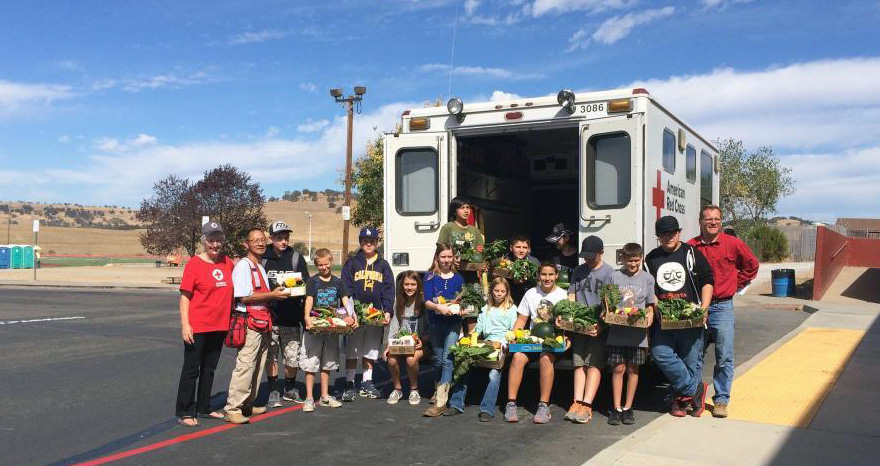
Red Cross joins the effort to get school garden veggies to families in need
Students from Toyon Middle School in Valley Springs donated their harvest to fire victims.
So many people and organizations have stepped up these last two in weeks as the Butte Fire burned more than 70,000 acres in Calaveras and Amador Counties, destroying over 500 homes and evacuating thousands from their homes for days on end.
“We wanted to help too,” said Zach Guillemin a Railroad Flat Resident and 8th grader at Toyon Middle school in the garden and landscaping class.
“I know a lot of families up where we live that lost their gardens in the fire, and we thought maybe we could give them some of the vegetables we are growing in our school garden since they aren’t able to grow them anymore,” Guillemin said.
With the wheels set in motion, many organizations stepped up to support the effort. The American Red Cross, The Resource Connection Food Bank, The UCCE Central Sierra, Calaveras Unified School District, Gardens to Grow In, Community Emergency Response Teams, FoodCorps, Calaveras FFA and many community partners all jumped on board to help make this happen.
For the last two weeks all of the vegetables that are being harvested from the Calaveras High School Farm, Toyon Middle School and many of the elementary school gardens have been given directly to those affected by the fire.
“It is has been great to see so many of the students so excited to help, and feel like that are able to do something valuable for this community,” said Lucas Hill, a FoodCorps service member who serves at the Calaveras High School Farm and Gold Strike High School. “Being new to this community, I have been so impressed by the youth and organizations that have mobilized to make this a reality.”
In addition to harvesting the vegetables and getting them distributed to families in need, Hill also helped lead a cooking session in the Valley Springs Elementary School Garden for Oakendell students who had been evacuated to the gym, and held a garden activity day for children and families evacuated to the campgrounds with FoodCorps service member Emily Metzger.
Food harvested from the gardens has been given to the Resource Connection Food Bank and American Red Cross for distribution and given directly to families at the school sites.
“These are the kinds of things that make us all feel so good inside,” said Marti Crane, long time Red Cross Volunteer and Calaveras County resident. “When I heard that the schools were needing a way to get these veggies to the families, we saw a great opportunity for collaboration. The youth in our community are amazing and we are so happy we have been able to help them fulfill their vision of feeding these families with these wonderful vegetables they have put so much time and love into growing.”
In all, over 300 pounds of vegetables grown at the Calaveras High School Farm and school gardens has been given away the last two weeks
“We plan to continue giving away the vegetables we are growing as long as there is a need,” said Guillemin. “It feels good to be able to provide something as foundational as healthy food for those that need it,” he added.
Author: Rich Woodruff, Deployed from Salt Lake City, Utah
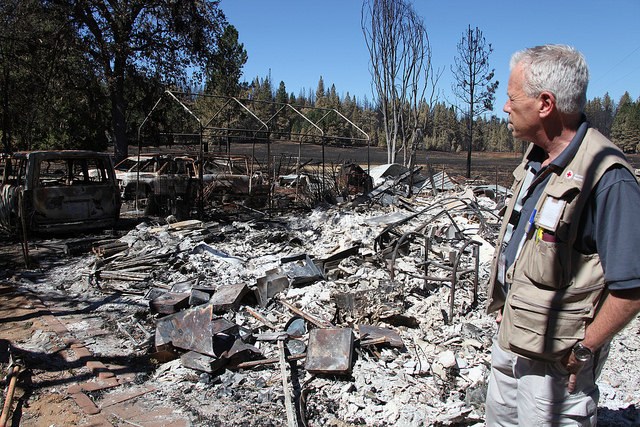
Rich Woodruff surveys one of the home sites ravaged by the Butte Fire
The Red Cross Story at the Butte fire is not a single story, but many stories as communities, government, interfaith communities and businesses come together during times of crisis. The media has played a critical role in disseminating information to the public and raising funds for the Red Cross through telethons and other campaigns.
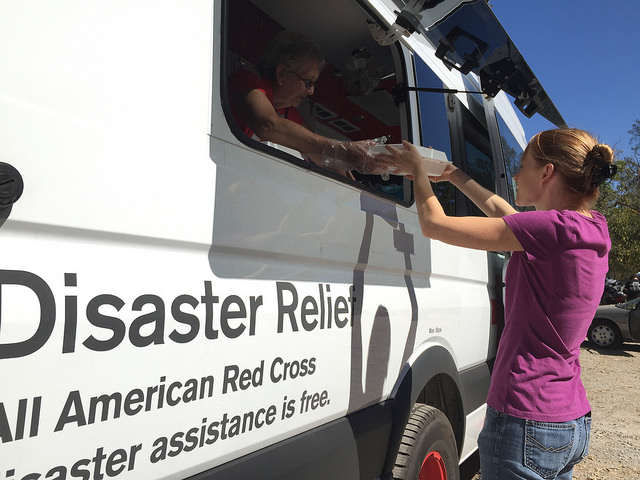
The Red Cross has been distributing cleaning supplies and food at many areas affected by the Butte Fire. Just yesterday, when our emergency response vehicle was arriving to one of the areas that was blackened by the fire, people camping on their decimated property began wandering down from the hills in dire need of food, clothing, bedding, batteries, diapers, dog food … the list goes on and on.
Red Cross volunteers were there to greet them with a warm smile, hugs and more. Our mission there was twofold: to distribute relief and clean up supplies as well as serving lunch prepared by the Southern Baptist remote kitchen in nearby San Andreas. The kitchen cooks thousands of meals a day and Red Cross ERVs (Emergency Response Vehicles) get them to the people where they are since most have lost their transportation. Today’s lunch was chicken fingers, potato salad and homemade banana pudding. The food was fresh and warm thanks to the special insulation containers used in the ERV’s.
One story that really touched me was the story of Mary from the Mountain Ranch area. Mary had not eaten in two days and was scouring the makeshift store for diapers, bedding, clean clothes and just basic needs like toiletries. She also was asking about burn cream for her cat that had wandered on to the smoldering ashes of her property. I quickly joined her rummaging through boxes finally coming upon some Aloe Vera. At this time, her pet’s needs were more important to her than her own needs. She rushed to put some of the aloe vera on her cat… we waited and invited her to eat some food. While she was eating, Mary shared her story and appreciation for our immediate concern and help. A few minutes later, a line was forming behind the Red Cross supply truck full of rakes, garbage bags, gloves, buckets, dust masks and other clean-up supplies.
Another person affected by the Butte Fire, showed up with another specific need. Bob, was asking if we had any sifters and thanks to the generosity of Ace Hardware we actually did.
Ace Hardware donated 2×4’s and screens and Red Cross volunteers built more than 600 sifters so that they can be distributed during our routes to the affected area. Bob had heard of people finding valuables and was hopeful to do the same. In our efforts to take care of first things first, it’s easy to overlook the importance of a mailbox key or the emotional boost a retrieved precious family heirloom would provide.
Recovering from a disaster takes time and the Red Cross will be working alongside partners in the community to deliver aid for months to come.
We were here before this disaster, during and will remain after, because that’s what we do.
Jackson, CA, Thursday, September 19, 2015 – The American Red Cross will open a Client Assistance Center to help people affected by the Butte Fire beginning Saturday, September 19, 2015. The center is located at the St. Katharine Drexel Parish at 11361 Prospect Dr., in Jackson, California. The Center will be open from 10:00 a.m. to 7:00 p.m., for the next few days.
Residents from Amador and Calaveras Counties who were affected by the Butte Fire are welcomed at the assistance center to begin the recovery process. Red Cross caseworkers are available to help people create personal recovery plans, navigate paperwork, and locate assistance from the Red Cross and other agencies. Caseworkers will meet one-on-one with residents to help them with their specific disaster-caused emergency needs such as clean-up or new housing assistance, transportation costs, furniture and clothing replacement.
Additionally, Red Cross volunteers will be distributing clean-up kits with mops, buckets, bleach, trash bags and rakes at this center and additional locations.
“Red Cross volunteers are loading trucks and traveling to affected neighborhoods with food and supplies. Our disaster workers are doing whatever we can to reach more people who need help,” said Teresa Caver, Interim CEO of the American Red Cross Gold Country Region. “We understand that people are living in very tough conditions. The uncertainty of whether people will have homes to return to makes this an emotionally draining time. Red Cross mental health volunteers are supporting residents as they learn the status of the homes.”
Red Cross healthcare workers will also be there to help with minor medical needs, and trained mental health workers will be available to provide emotional support and coping strategies.
The American Red Cross will also be available at the Calaveras Local Assistance Center (CLAC) and provide information about available assistance. The CLAC will be operating at the Calaveras County Government Center located at 891 Mountain Ranch Road in San Andreas starting today at 9:00 a.m. until 7:00 p.m. and will be open until Monday.
Shelters remain open at Jackson Rancheria in Amador County, the Good Samaritan Church, and the Jenny Lynn Veterans Hall in Calaveras County. More than 1500 people sought refuge in our shelters and many more are visiting every day for hot meals and information about what help is available.
Trained Red Cross health and mental health workers are providing services to people at the shelters, including emotional support and replacing prescription medications and eyeglasses.
The Red Cross has provided the following to people impacted by the fires:
o More than 5,400 overnight stays in shelters
o More than 32,000 meals and snacks
o More than 2,300 health and mental health services
DOWNLOAD THE FREE RED CROSS APPS
Stay informed: The Red Cross has several smartphone apps available that will alert you to National Weather Service warnings for severe weather and flash flooding and provide you with preparedness and safety information. These free apps are available for download at redcross.org/apps.
VOLUNTEERING
At this time, the American Red Cross of Gold Country Region is fortunate to have volunteers who are trained, ready and willing to support our response to the flooding in our communities. We thank individuals and community groups who are willing to support this effort and encourage them to register to become new volunteers to help with future disaster responses. Learn more and register online at redcross.org /volunteer and complete the online application.
About the American Red Cross Gold Country Region Founded in 1898, the Gold Country Region of the American Red Cross serves 4.4 million people in Alpine, Amador, Butte, Calaveras, Colusa, El Dorado, Glenn, Lassen, Modoc, Nevada, Placer, Plumas, Sacramento, San Joaquin, Shasta, Sierra, Siskiyou, Stanislaus, Sutter, Tehama, Trinity, Tuolumne, Yolo, and Yuba counties. The Red Cross shelters, feeds and provides emotional support to victims of disasters; supplies nearly half of the nation’s blood; teaches lifesaving skills; provides international humanitarian aid; and supports military members and their families. The Red Cross is a charitable organization — not a government agency — and depends on volunteers and the generosity of the American public to perform its mission.

 ry Braxton was among the first to assist the American Red Cross when he and his neighbors were caught in the path of rising water in the Natchez, Louisiana, area. Every day for nearly a week, he did whatever he could do to lend a hand, from helping to distribute cleanup kits to showing volunteers flood-damaged areas.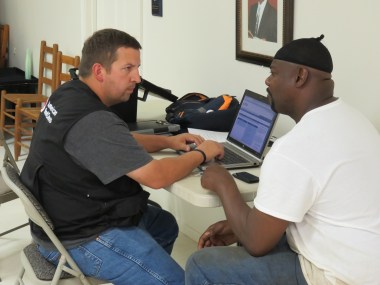
 Across the country, the Red Cross provided more than 34,000 overnight shelter stays to people forced from their homes because of disasters, served more than 1.1 million meals and snacks and distributed more than 800,000 relief items this year (as of December 8). Red Cross caseworkers provided recovery support to more than 19,000 households, and health and mental health workers provided more than 65,000 consultations after disasters.
 Nepal Earthquake and Migration Crisis



 Gold Country News and Notes