The wonderful team at Flowers Food Bakery, in Modesto, has done it again, and this time we want to extend our deepest appreciation to them for all of the generous gifts and services that they have and continue to provide.
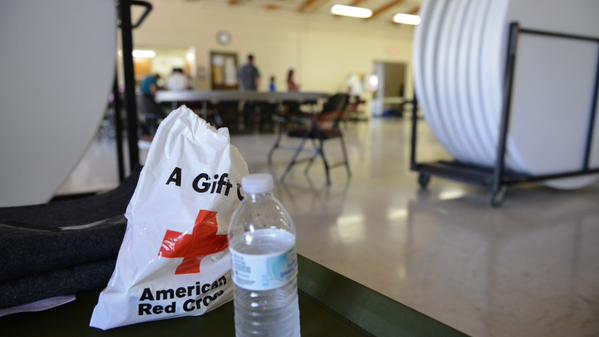
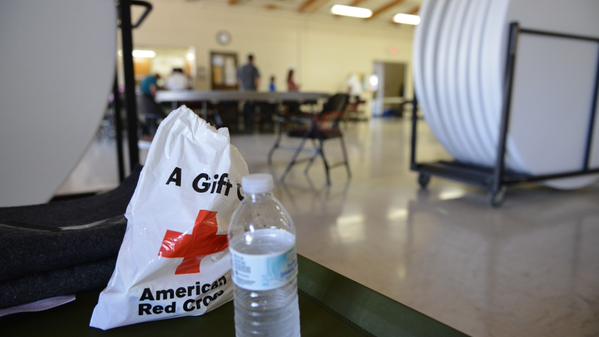
Thursday, August 6th, to help survivors of the Mad River and Fork Fire Complexes, Flowers Food made a special delivery to our shelters that were open in Trinity County. Breakfast and snack items were served to everyone!
Last year during the King, Boles and Applegate fires the wonderful team went above and beyond to bring the community together during their time of need.
They delivered product to our emergency command center in Sacramento and to our shelter in Applegate. They even went as far as to host an amazing barbecue lunch for the volunteers and staff!
These acts of kindness fall right in line with the American Red Cross values; compassionate, collaborative, creative, credible and committed! We are truly grateful!
Post by Jessica Lach, IHL Youth Education Intern. Originally posted on the Humanity in War blog.
Millennials, the generation born between 1980 and the mid-2000s, are said to be full of complexities and firsts. Born in 1994, I consider myself a true millennial because I check most of the required boxes: I had Internet access during my formative years and social media as I grew into adulthood, and I learned all about the economy by watching the effects of the 2008 Global Economic Recession. Most importantly, me and my generation have been overexposed to media more so than any other generation preceding us. Despite all the information we are regularly thrown, we sometimes have skewed perspectives, especially when it comes to putting International Humanitarian Law into context.
A New Way of Getting and Processing Information
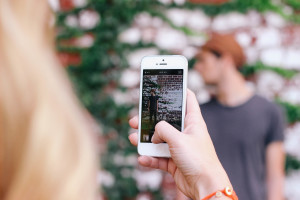
Millennials are the first generation to collectively form a true companionship with something lacking a living pulse — in other words, our smartphones have become a part of our daily lives and regular communications. Not only are our smartphones an extension of ourselves, but they are how we see the world we are living in. I know I am not the only one guilty of checking my social media news feeds before I even get out of bed in the morning. After all, about “six-in-ten online Millennials (61%) report getting [political] news on Facebook in a given week, a much larger percentage than turn to any other news source, according to a new Pew Research Center analysis”. From the comfort of bed, I can become fully aware of what the weather is like, how political situations across the world are panning out, and, most importantly, what a Kardashian sister ordered from Starbucks. New technological apps have simply become parts of our daily routines. Having progressed from Myspace home pages and then Facebook timelines, to Twitter feeds and Instagram posts, we Millennials have now found ourselves getting a look at daily life from 10-second Snapchat stories. From Snapchat, members of Generation Y have learned about the Greek referendum and other world events through the eyes of people much like ourselves. Furthermore, we are a generation that relaxes to the welcome screen of Netflix and opening chime of Xbox.
A Skewed Version of Reality, Including Rules of War
However, with the movies and video games which we regularly expose ourselves to through these and other services, a lot of what we see is not entirely accurate when it comes to properly portraying the rules of war. Common dystopian novels and movies, like The Hunger Games and Batman, regularly show scenes of destruction to civilian compounds and even the use of child soldiers, both of which are prohibited under IHL. Popular video games also tend to portray a world of warfare that skews the reality of what a wartime conflict is like and the real protections that are in place. I facilitated a Raid Cross activity once, during which my team and I hosted an open discussion about what the rules of war include. Throughout this discussion, many students tried to tell us that it was okay to take items off of deceased soldiers since this action is permitted in the popular video game Call of Duty.
Before I learned about IHL, I never really thought that rules of war existed, especially since modern media rarely displays them. Although I know fiction is merely fiction, when something is regularly portrayed, it can be easy to apply it to real life. For example, regularly watching movies like The Hunger Games may lead young people to believe that children carrying and firing weaponry is normal, whereas it is prohibited under IHL. The Call of Duty instance above is another example.
Why Understanding IHL Protections Is Critical
Though Millennials are a generation of information seekers and seem to always be plugged in, the result is that we can easily skew information and not fully understand the true implications of what we are exposed to in the media. When prompted with the question of “Why should Millennials care about IHL?”, the answer is simple: we are exposed to wartime conflicts more so than any other generation before us was from the media, meaning it is important that we understand the protections granted under IHL. It is imperative that we understand that what we see in the media is not always legal, not only because the rules of war are important but also because they may be vital to the strangers we see gracing our Snapchat stories an ocean away. As Millennials, we watch snippets about life on the frontlines on our Facebook timelines and then sit down and relax to Game of Thrones, all while forgetting that there are rules of war that, in effect, help shape the conflicts of our day. Though we are a generation known for our overexposure, we are also one of great conviction- a similar conviction that was found in the creation of the Geneva Conventions decades ago.
August 12 is International Youth Day! And the American Red Cross is celebrating our young partners like Carolyn Strzalka, President of the Red Cross Club at the University of Michigan. Carolyn is a blood recipient, a donor and a Red Cross volunteer.
Here’s Carolyn’s Inspiring Story:
In high school I was an active student. I volunteered regularly at a local animal shelter and organized local food donation drives in addition to working hard on my studies. As varsity soccer captain, I ate healthy and exercised, making sure to take care of my health. So when I turned 18 and started experiencing sharp abdominal pains I knew something was not right.
When my doctor told me that I needed to have my gall bladder removed two days before moving into my college dorm I was nervous I would miss out on all the welcome week activities. As a stubborn 18 year old, I adamantly told him that after my cholecystectomy I would be going off to college. He explained to me the surgery was an out-patient surgery and I should be recovered enough to partake in any non-strenuous activities. But the day after I moved into my dorm room I knew something was not right. After not being able to keep any food down and almost fainting walking back to my dorm room I called my mom and asked her to take me to the hospital.
In the emergency room, the physicians told my parents that there was a very low chance that I would survive. I had been internally bleeding into my stomach for 3 days and my red blood cell levels were at a third of what they should have been. He suggested I receive two blood transfusions, but cautioned my parents that it may already be too late. Fortunately, the blood transfusions saved my life.
I am beyond thankful for the blood donors whose donations have allowed me to be alive today. These donors have a special place in my heart because I have type O negative blood and can only receive blood from other type O negative people.
After this experience I wanted to give back to blood donors who helped save lives like mine. However, after receiving a blood transfusion you are not able to donate blood for a year. So I began volunteering at blood drives to let people know how much their donation meant to people like me. While volunteering I got to hear inspiring stories about why other people donated blood, including stories from people who donate blood every 56 days. After experiencing the need for blood donations first hand, I now am inspired to donate every 56 days as well.
How to Get Involved:
Join Carolyn by choosing to make a difference in your community this summer with the Red Cross, either through blood donation, taking a babysitting class or volunteering. You can find more ways to get involved at RedCrossYouth.org. #ChooseYourDay
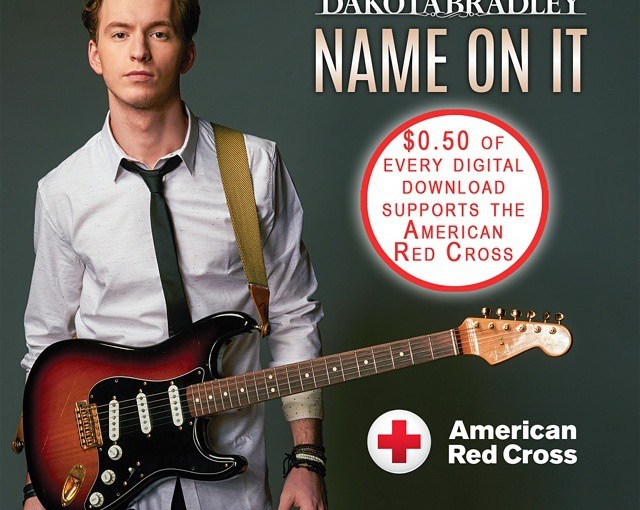
After losing his childhood home in a house fire at the age of 15, singer/songwriter Dakota Bradleyhas a personal connection to those who know all too well what the fire takes from people. Growing up in St. Louis, MO, Bradley moved to Nashville, TN at the age of 16 after his family lost everything in a house fire. This life-changing experience is the inspiration behind Bradley’s passion to partner with the American Red Cross and to serve as an Ambassador for our home fire campaign to reduce fire deaths and injuries by 25%.
“Losing my home in a fire was devastating. I am honored to partner with the American Red Cross in hopes to prevent similar tragedies, as well as a way to help fire victims,” says Bradley.
To kick off the yearlong giving campaign, Bradley will donate $0.50 to the American Red Cross for every digital purchase of “Name On It” sold between now and September 30, 2015. You can download his new single by visiting iTunes. Your gift to Home Fire Relief enables the Red Cross to provide critical services to people impacted by home fires along with the lifesaving tools and information to support home fire prevention efforts.
The #RedCross makes a difference every single day and you can be a part of it!! If you are in the Sacramento/Redding area, we need volunteers too! http://ow.ly/QA15s
The American Red Cross has recently been in extra need of blood donors; the impact of blood donors has always proved instrumental in saving lives. As blood donations continue to decline this summer, the American Red Cross asks eligible donors to remember patients who are counting on the generosity of volunteers to roll up a sleeve and give. Without lifesaving blood, patients like 3-year-old Emily Stephenson wouldn’t be alive to share their stories.
Emily’s Story
Emily was only a few days old when her parents, Amy and Wayne Stephenson, learned she had a genetic blood disorder which causes severe anemia. To remain healthy, Emily will require blood transfusions every six to eight weeks until she is at least 10 years old. She’s already received blood more than 30 times.
“Blood donation is the bridge between life and death for Emily, but it is also so much more,” said Amy Stephenson. “It is learning to ride a bike, going to her first dance, earning a diploma and walking down an aisle someday.”
The Red Cross partnered with the Stephenson family in a special video to put a face on the importance of blood donation. In the video “Emily’s Story: A Letter from Mom and Dad,” the Stephensons want to express eternal gratitude for those who roll up a sleeve to help Emily live.
“The process of donation may appear to be filled with anonymity, but we see a name in every unit Emily receives during a transfusion,” said Amy Stephenson. “While we do not know the donor, we can see your heart and we appreciate you.”
Emily is one of many individuals who are in urgent need of blood; one donor can potentially save up to three lives from just one pint of blood.
The Red Cross has an urgent need for eligible blood donors with types O negative, B negative and A negative blood to give now to prevent an emergency situation. Type O negative is the universal blood type and can be transfused to patients with any blood type. Types A negative and B negative can be transfused to Rh positive or negative patients. Individuals with these blood types are urged to make and keep donation appointments as soon as possible to help replenish the blood supply.
Platelet donors and those with type AB blood are also continually needed to help ensure the shelves are stocked for patients in need. Platelets – a key clotting component of blood often needed by cancer patients, surgical patients and bone marrow recipients – must be transfused within five days of donation, so donations are always needed. Donors with type AB blood are urgently needed to restock the plasma supply. Type AB donors have the universal plasma type, which can be given to patients of all blood types.
Plasma is often needed for burn, trauma and clotting deficiency patients. Plasma can be collected during a blood or platelet donation.
Everyone is encouraged to give blood or platelets to help patients like Emily and replenish the blood supply. For more information or to schedule an appointment to donate blood, call 1-800-RED CROSS (1-800-733-2767) or visit redcrossblood.org. Donors can also use the Red Cross Blood Donor App, which is free and available for download now. It can be found in app stores by searching for American Red Cross, visiting redcross.org/apps or redcrossblood.org/bloodapp, or by texting BLOODAPP to 90999 for a direct link to download.
If you would like to donate in the Gold Country Region, visit Delta Blood Bank for information of when and where to donate.
The American Red Cross has renewed its Memorandum of Agreement (MOA) with the Federal Emergency Management Agency (FEMA). The MOA is aimed at defining the overarching goals of the relationship between the two organizations. The Red Cross and FEMA last signed an MOA in 2010. The 2010 MOA focused on the collaboration between the two organizations in coordinating and delivering mass care services during disaster responses, and specifically on the Red Cross role as co-lead for mass care portion of Emergency Support Function-6, one of 15 Emergency Support Functions identified in the National Response Framework.
Since 2010, both FEMA and the Red Cross have enhanced their perspective to include all phases of the disaster cycle. In 2011, President Obama signed Presidential Policy Directive 8, which tasked FEMA with coordinating the production of National Planning Frameworks across the disaster cycle, including prevention, protection, mitigation, response, and recovery. In 2012, the Red Cross undertook a business process reengineering effort that resulted in alignment of its disaster preparedness, response, and recovery mission areas.
While the MOA still addresses the Red Cross co-lead role in Emergency Support Function-6, it also recognizes the important role the Red Cross plays in other Emergency Support Functions, Recovery Support Functions, and preparedness functions.
“This renewed MOA is a great reflection of Disaster Cycle Services and the goals and vision we set with re-engineering,” said Richard Reed, Senior Vice-President for Disaster Cycle Services. “Working together with FEMA, we expanded our agreement to ensure our partnership covered the entire disaster cycle. And we now have an agreement that is not only more strategic in nature but also speaks to the specifics of how our two organizations work together in preparedness, response and recovery.”
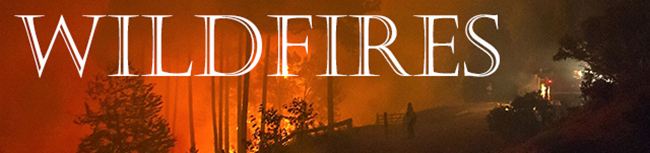
Wildfire season has been a year-round threat in California due to the extreme four-year drought. According to the National Interagency Coordination Center (NICC), almost 20 large fires are burning now and more than 100 new fires have been reported.
The American Red Cross is helping people impacted by several fires burning in the Golden State and offers safety tips on how to better protect yourself and your loved ones from a wildfire.
Currently, the Gold Country region alone has been operating two shelters in Trinity County due to the Mad River Complex Fires and the Fork Complex Fires.
Talk with members of your household about wildfires – how to prevent them and what to do if one occurs.
Select a place for family members to meet outside your neighborhood in case you cannot get home or need to evacuate.
Identify someone who is out of the area to contact if local phone lines are not working.
Post emergency numbers by every phone, or enter them into your cell phones.
Make a plan and practice it. Plan and practice two ways out of your neighborhood or vacation area in case your primary route is blocked.
Firewood should be stacked at least 30 feet uphill from your home or camping spot. Clear combustible material within 20 ft. of the stack. Fire tends to travel uphill, so keep highly combustible firewood and other materials above your home or vacation area.
IF A WILDFIRE THREATENS
Be ready to leave at a moment’s notice.
Listen to local radio and television stations for updated emergency information.
Always back your car into the garage or park it in an open space facing the direction of escape.
Confine pets to one room or spot so that you can find them if you need to evacuate quickly.
Arrange for temporary housing at a friend or relative’s home outside the threatened area.
Keep indoor air clean by closing windows and doors to prevent outside smoke from getting in.
Use the recycle or re-circulate mode on the air conditioner in your home or car.
When smoke levels are high, do not use anything that burns and adds to indoor air pollution, such as candles, fireplaces and gas stoves.
The free Emergency App is highly customizable and informative with alerts, vital emergency information and a “Family Safe” feature to notify loved ones that an alert has been issued in their area and check to see if they are safe. Find it in your app store by searching for American Red Cross.
HOW TO HELP
Become a volunteer or make a donation to Red Cross Disaster Relief. Your donations can help provide shelter for someone who has had to leave their home and food and water for them to eat. Help people affected by disasters like wildfires, earthquakes, floods, tornadoes and countless other crises by making a gift to Red Cross Disaster Relief. Your gift enables the Red Cross to prepare for, respond to and help people recover from disasters big and small. To donate, people can visit www.redcross.org, call 1-800-RED CROSS (1-800-733-2767) or text REDCROSS to 90999 to make a $10 donation.
A large flare-up from the Wragg Fire is seen in a photograph taken in rural Solano County, California on July 28, 2015. (Photo credit: Matthew Keys)
SACRAMENTO, CA (July 31, 2015)— The American Red Cross Gold Country Region has spent the last several days responding to multiple wildfires throughout Northern California. Thankfully, we’re ready to respond at a moment’s notice and we are prepared for what could be one of the worst wildfire seasons that California has experienced.
“We know this is just a sneak peek into how bad the fires could be this season” said Lilly Wyatt, American Red Cross Communications Director. “With the extreme drought we’ve been experiencing for four years, we know the threat is there and we are ready to respond and assist our community.”
WRAGG FIRE The Wragg Fire, which began on Wednesday, July 22, forced multiple evacuations around Solano and Yolo Counties. The Red Cross set up an evacuation center at the Winters Community Center, 201 Railroad Ave, Winters, CA, where evacuated residents can received lodging, meals, comfort and information. We accommodated five residents overnight, but had more than 20 fluctuating throughout the day as residents come and go.
KYBURZ FIRE Thursday July 23, more Red Cross volunteers were called into action to set up an evacuation center at the Pollock Pines-Camino Community Center, 2675 Sanders Drive, Pollock Pines, CA. for resident impacted by the Kybrurz Fire, which closed both directions of Highway 50. We
LOWELL FIRE The Lowell Fire at the Nevada/Placer county lines exploded just as the Kyburz Fire was easing on Saturday, July 25 around 3pm. We opened a shelter in Grass Valley to support Nevada Country residents. Eleven residents stayed at the shelter overnight and another 15 persons staying in the parking lot of the High School in camper’s cars and motorhomes. Red Cross provided breakfast, lunch, dinner and snacks to 25 people while the shelter was opened.
SWEDE’S FLAT FIRE In the morning of Wednesday, July 29 another wild land fire erupted, this time in Butte County. Local government requested the Red Cross to set up an Evacuation Center and we were able to have it available within a couple of hours at the Church of the Nazarene in Oroville CA. The evacuation center quickly transitioned into a full shelter to house seven individuals overnight.
CHINA, HAPPY AND MALLARD FIRES Three different blazes sparked in Shasta County the evening of July 29. Although small in acreage they were threatening multiple homes and the Red Cross established a shelter at Anderson High School.
BIG CREEK FIRE Also on July 29 a vegetation fire in the Groveland Area of Tuolumne County began burning heavy timber. The fire spread quickly and 65 homes were evacuated. At 8:00pm, Red Cross staff and volunteers established the evacuation center at Groveland Community Hall to have it ready for those who needed a comfortable place to rest.
“In 2014, we responded to dozens of wildfires, more than ever before and 2015 is shaping up to be as bad as last year,” said Wyatt. “From July 1 to the end of September we had at least one shelter open except for just 18 hours.”
BE PREPARED The Red Cross urges communities throughout California to get prepared for what will likely be a long and severe wildfire season. The Red Cross urges residents to follow all evacuation orders from local enforcement and be prepared for disasters like wildfires. All families should have an emergency game plan for disasters large and small. Make sure your home has an emergency kit ready to go at a moment’s notice.
Click here to learn more about preparing for and responding to wildfires.
HOW TO HELP Become a volunteer or make a donation to Red Cross Disaster Relief. Your donations can help provide shelter for someone who has had to leave their home and food and water for them to eat. Help people affected by disasters like wildfires, earthquakes, floods, tornadoes and countless other crises by making a gift to Red Cross Disaster Relief. Your gift enables the Red Cross to prepare for, respond to and help people recover from disasters big and small. To donate, people can visit www.redcross.org, call 1-800-RED CROSS (1-800-733-2767) or text REDCROSS to 90999 to make a $10 donation.
When soldiers return home, they can have a a joyous yet, sometimes a stressful time adjusting to their new life after service. While most military families are excited to see their beloved ones return from deployment, many are faced with the challenges of rebuilding relationships within their homes and community.
The American Red Cross in partnership with Walmart has been providing “Reconnection Workshops” for military families allowing for positive reunions for military families and their returning deployed military loved ones.
The workshops are free and are run by actively licensed and specially trained Red Cross mental health volunteers. Topics that are discussed include: managing anger, supporting children, post traumatic stress disorder, building communication, and other topics critical to reunion adjustment. This workshop is a complement of the “Red Cross Coping with Deployments: Psychological First Aid for Military Families” program which focuses on building resiliency and coping with challenges of the deployment cycle. Both programs have shown a remarkable amount of progress in providing service members and their families a tool to grow in terms of their relationships. The workshop in all it’s glory demonstrates how a positive environment to communicate can lead a long way in comforting our service members as they return back to their beloved homeland.
Tobrin Hewitt, Service to the Armed Forces Program Manager of the American Red Cross Gold Country Region shared his perspective on the program in an interview:
Why is the “Reconnection Workshop” a program families should consider during the return of deployed military family members?
“A lot of service members return home from deployments and successfully readjust to their lives and within their community; however, some solders have a harder time transitioning back from the high tempo of a deployment. Some of the challenges that service members face include readjusting to their partners, engaging children, redefining the family routine, and managing health problems that can be present after deployment.”
What is the most rewarding part of the program for most families?
“The tools that service members gain from these workshops which are instrumental in rebuilding positive relationships with their own families and society.”
How is the program usually run and what can attendees expect from a session?
“The workshops are small groups (3-12) and they are 90 minutes long. One of five topics that will be discussed will be selected based on the needs of the individual group during each specific workshop session. Some important topics include communicating clearly, exploring stress and trauma, identifying depression, relating to children, and working through anger.”
Is there anything crucial that the attendees should consider or prepare for before they attend a session?
“The workshops are geared towards participation so including service members personal experiences helps towards the overall effectiveness of the workshop.”
The workshop is available to all service members and their family members interested in seeking post-deployment support.







 Gold Country News and Notes