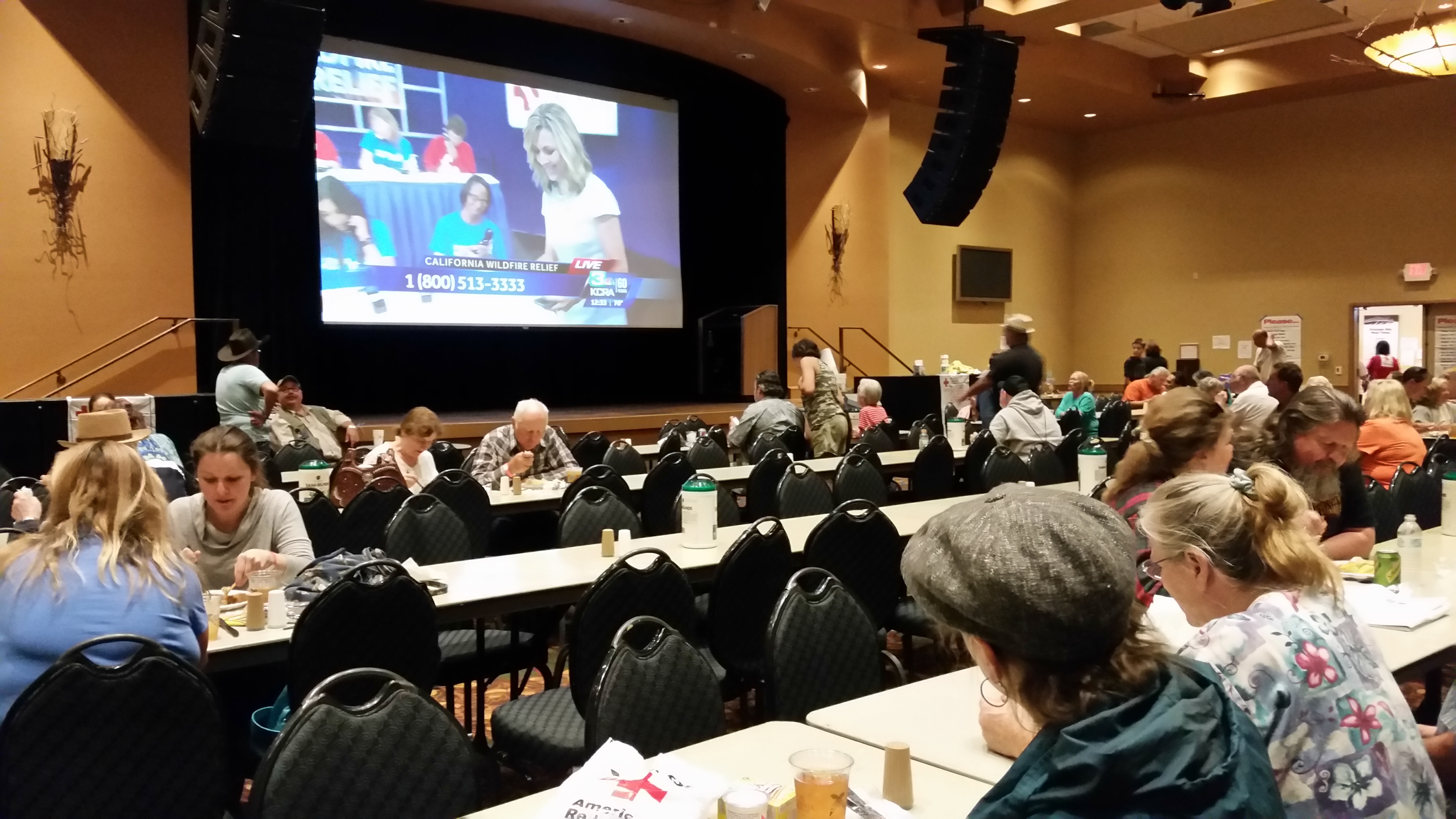
Jackson Rancheria Provides Comfort and Shelter to Butte Fire Evacuees

20150915_123351

Author: Sandy Baker, Red Cross Volunteer

“It’s rewarding to pull this off,” says Rich Hoffman, CEO of Jackson Rancheria, sweeping his hand across the crowd of people eating dinner in the evacuation center dining hall.  Hundreds of evacuees fill the tables and line the back of the room filling plates from a buffet fit for any resort casino.  This seems to be a bright spot of their day, greeting friends and neighbors with hugs and teary eyes.

The question I keep asking myself, and now to Rich and Bill Thornton, Jackson Rancheria CFO, is this:  Why are you doing this?  “Hospitality is our business,” Rich says.  “We just changed our guests.”  A week ago, folks came in for relaxation and entertainment; now, the Rancheria is providing a safe place to sleep and meals three times a day to help evacuees be less stressed.

And they seem to be doing a fine job of that.  “They are an absolute godsend,” says Teri Lutzi, an evacuee from San Andreas.  She’s up at 6:00 am in the shelter lobby tying her shoes to get ready for work.  “Thanks to Jackson Rancheria and the Red Cross I have somewhere safe to sleep.”  She spent a night in her car, and a couple of nights camped out in a local business before registering here at the shelter.  She thinks her house may have survived the fire, but it has no power which means no water from the well, so she may be here awhile.  That’s ok, because Jackson Rancheria will still be here to help.

“It’s not over until it’s over,” Rich says.  “We will continue on assisting and helping.  The evacuation is just the first step.  The tribe will be here every step of the way.”

“It’s the culture the tribe created,” Bill keeps saying.  “This is our community.  We take care of each other.”

That care extends beyond just the tribe.  It’s evident in the way the evacuees are treated as guests of a fine resort.  From the chefs in white coats checking on the chaffing dishes, to the security personnel roaming the halls, everyone is kind, smiling, and offering support.  “It’s our culture,” the staff says.  “It’s how we were raised.”  It’s the same answer I get from all the team members.  The story never changes.

Rich can tell that I am still baffled at why a company would feed people, give them free lodging, provide shuttle service and tokens for laundry.  And he’s right.  Why not just write a check like so many of our generous supporters do?  I finally get an answer that makes sense.  He explains that the concept of prestige is different in the Native American culture than in the Western culture.  Prestige in a Western culture is judged by the Donald Trump types, measured by what a person owns.  In the Native American culture prestige is earned by who you can provide for.  This seems perfectly poignant for those who may have lost everything they own.

Before Terri Lutz heads off to work today she will first stop off to care for evacuated animals of friends from her community.  It’s her way of giving back, and in my new perspective, building her own prestige.

Red Cross and KCRA3 To Host a California Wildfires Telethon Tomorrow

OKC_telethon16
KCRA
has once more stepped up to support the American Red Cross and our local communities!

Currently, the American Red Cross is helping more than 1,130 people at 7 shelters across Northern California that have been affected by the Rough, Butte and Valley Fires.

At the shelters, Red Cross volunteers are providing meals, personal hygiene items, cleaning supplies, health services such as replacing medications and eyeglasses and emotional support for the people affected by the fires.

The telethon is scheduled for tomorrow, Tuesday, September 15 from 4:30 a.m. – 7:00 p.m. on KCRA3, with a cut-over to MY58 from 7:00 a.m. – 9:00 a.m.

Help people affected by the California Wildfires. Your donation enables the Red Cross to prepare for, respond to and help people recover from these disasters.OKC_telethon15

The telethon number to make a donation is: 800-513-3333 and it will be staffed by Red Cross volunteers and corporate partners.

We have some exciting check presentations by our wonderful community partners!

And this just in! Salem Communications and I Heart Radio have begun promoting the telethon in their radio programming! (KKFS- the Fish, 1380AM-The Answer, 710AM KFIA, 105.5FM and I-Heart Radio Modesto!) 

Thank you to everyone who has been calling to help!

PS. If you are not able to call during the telethon, you can donate to the California Wildfires to the Gold Country Region of the American Red Cross:

  • Mail in  your donation to: American Red Cross Gold Country Region | Attention: Laura Thompson | 1565 Exposition Blvd, Sacramento, CA 95815
  • Call: Laura Thompson, r | 916-993-7080 | Please note, this is a recording, please leave a message and Laura will call you back to ask for your donation which will be designated to the California Wildfires.

American Red Cross Establishes Public Information Line in Response to the Butte Fire

ButteFire-ABC10Jackson, CA – Saturday, September 12, 2015 – The American Red Cross has established a public information line for inquiries from the public regarding Red Cross services during the Butte Fire.

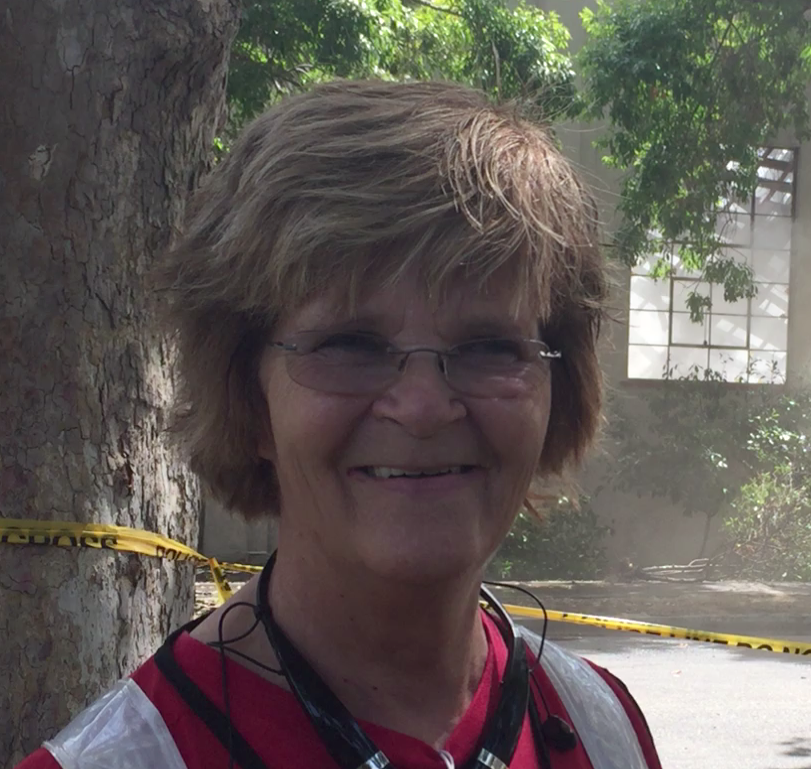
The number to call is: (925)588-6678. The phone number is being staffed by a Red Cross volunteer. If you get a busy signal, we ask for your patience and to call back.

The three emergency evacuation shelters established by the Red Cross are located at:

Calaveras County

  • Good Samaritan Church, 4684 Baldwin St, Valley Springs
  • Jenny Lynn Veterans Hall, 189 Pine Street, Valley Springs

Amador County

  • Jackson Rancheria Hotel and Resort – 12222 New York Ranch Rd, Jackson

IN-KIND DONATIONS

We appreciate the good intentions of people who want to donate items, but financial donations are the quickest and best way to get help to the people who need it most.

The Red Cross isn’t equipped to handle a large influx of donations such as household items, clothing or food that may or may not be useful to victims as it takes time and money to store, sort and distribute donated items. If community members still like to donate goods, we recommend they contact other organizations in their community and inquire if they are accepting donations.  

“Financial donations allow us to be flexible in the help we deliver and ensure that we can provide what disaster victims need most,” said Lilly Wyatt, Director of Regional Communications with the American Red Cross Gold Country Region. “Donating is simple, just call 1-800-Red Cross or text the word REDCROSS to 90999 to make a $10 donation.”

All Red Cross disaster assistance is free, made possible by voluntary donations of time and money from the American people.

American Red Cross Responds to the Needs of Butte Fire Evacuees

Safe and Well Website Activated To Bring Peace of Mind

Sacramento, CA – September 10, 2015 – The American Red Cross has opened three emergency shelters in Amador and Calaveras counties to assist those affected by the explosive Butte Fire.  Currently, more than 200 people have registered at just one of the shelters and dozens of Red Cross staff and volunteers are providing warm meals, a safe place to sleep and emotional support for those with immediate, disaster-caused needs.

As of 10:00pm today, the following Red Cross managed or supported shelters are open:

Amador County

Jackson Rancheria Hotel and Resort – 12222 New York Ranch Rd, Jackson, CA 95642

Calaveras County

San Andreas Town Hall – 24 Church Hill Rd, San Andreas, CA 95249

Calaveras County Fairgrounds – 101 Frogtown Road, Angels Camp, CA 95222

“We sympathize with the individuals that we serve,” said Lilly Wyatt, Director of Regional Communications for the Red Cross Gold Country Region. “Red Cross disaster teams are helping now and will continue to help as long as we need to.”

SAFE AND WELL

Disasters often make it difficult to stay in touch with loved ones. The American Red Cross Safe and Well website is a central location for people in disaster areas in the United States to register their current status, and for their loved ones to access that information. It helps provide displaced families with relief and comfort during a stressful time.

If individuals are currently being affected by the Butte Fire, they need to register as “safe and well.” If individuals are concerned about a loved one affected by the Butte Fire, they need to Search Registrants.

Safe and Well is available 24 hours a day, 365 days a year and is accessible in both English and Spanish.

THE THREAT ISN’T OVER

The Red Cross urges communities throughout California to get prepared for what will likely be a long and severe wildfire season. The Red Cross urges residents to follow all evacuation orders from local enforcement and be prepared for disasters like wildfires. All families should have an emergency game plan for disasters large and small. Make sure your home has an emergency kit ready to go at a moment’s notice.

Click here to learn more about preparing for and responding to wildfires.

HOW YOU CAN HELP

All Red Cross disaster assistance is free, made possible by voluntary donations of time and money from the American people.

Help people affected by disasters like wildfires and countless other crises by making a gift to American Red Cross Disaster Relief. Your gift enables the Red Cross to prepare for, respond to and help people recover from disasters big and small. Visit redcross.org/donate, or call 1-800-REDCROSS.

About the American Red Cross Gold Country Region
Founded in 1898, the Gold Country Region of the American Red Cross serves 4.4 million people in Alpine, Amador, Butte, Calaveras, Colusa, El Dorado, Glenn, Lassen, Modoc, Nevada, Placer, Plumas, Sacramento, San Joaquin, Shasta, Sierra, Siskiyou, Stanislaus, Sutter, Tehama, Trinity, Tuolumne, Yolo, and Yuba counties. The Red Cross shelters, feeds and provides emotional support to victims of disasters; supplies nearly half of the nation’s blood; teaches lifesaving skills; provides international humanitarian aid; and supports military members and their families. The Red Cross is a charitable organization — not a government agency — and depends on volunteers and the generosity of the American public to perform its mission.

For more information, visit our website, or follow us on Twitter and Facebook.

American Red Cross Launches New Digital Emergency Services Tool for Military Families

Washington D.C., Thursday, September 10, 2015 — The American Red Cross is launching a new digital tool that gives military families the option to quickly communicate an emergency message from a computer, tablet or smartphone at redcross.org/HeroCareNetwork. This secure and free service will also let users track the progress of an emergency message from verification through delivery.

“On a consistent basis, more than 110,000 military families reach out to the American Red Cross for emergency assistance each year,” said Koby J. Langley, senior vice president of Service to the Armed Forces, American Red Cross. That’s approximately 300 military families per day. This new online tool, designed for today’s military family, offers a better and more efficient way to serve our military community during their time of need.”

A military member or a member of their family needing to initiate an emergency message can go to redcross.org/HeroCareNetwork or call 877-272-7337. After a message is started online, a highly-trained emergency communication specialist will begin the emergency verification process required to deliver it to the military member’s command. During the verification process, the requester will receive status updates.

“It’s important to remember that people can always speak to a Red Cross worker at anytime during the process,” said Langley. “Regardless of how families initiate an emergency message, military members can depend on the Red Cross to relay urgent messages to service members serving anywhere in the world.”

For more information regarding Red Cross Service to the Armed Forces visit redcross.org/military. Also, take a minute to read our Hero Care Network FAQs.

The Heat is On! (Again) – Safety Reminders

With a heat wave upon us, Red Cross has Tips to keep safe during extreme heat

Since summer’s clearly sticking around for the time being, this is a good time to refresh your memory of what you should do in a heat wave. The American Red Cross has some simple steps you can take to keep you and your kids safe.

icedogDuring a Heat Wave:

  • Never leave children or pets alone in enclosed vehicles
  • Stay hydrated by drinking plenty of fluids, even if you do not feel thirsty. Avoid drinks with caffeine or alcohol
  • Avoid extreme temperature changes
  • Wear loose-fitting, lightweight, light-colored clothing. Avoid dark colors because they absorb the sun’s rays
  • Slow down, stay indoors and avoid strenuous exercise during the hottest part of the day
  • Postpone outdoor games and activities
  • Use a buddy system when working in excessive heat. Take frequent breaks if you must work outdoors
  • Check on family, friends and neighbors who do not have air conditioning, who spend much of their time alone or who are more likely to be affected by the heat
  • Check on your animals frequently to ensure that they are not suffering from the heat

heat and sportsSports Safety
The return to school means many student athletes will be outside for practice. But during a heat wave, athletes should avoid workouts and exercise during the hottest times of the day—these should be scheduled for early in the day or later in the evening. Other ways to stay safe include:

  • Get acclimated to the heat by reducing the intensity of your workouts or exercise until you are more accustomed to the heat
  • Take frequent, longer breaks. Stop about every 20 minutes for fluids and try to stay in the shade
  • Those in charge of student practices should reduce the amount of heavy equipment athletes wear in extremely hot weather
  • Dress athletes in net-type jerseys or light-weight, light-colored cotton tee shirts and shorts
  • Know the signs of heat-related emergencies and monitor athletes closely
  • Athletes should inform those in charge if they are not feeling well

FIRST AID APP Could you tell if someone were suffering from heat exhaustion or heat stroke? Would you know how to respond? The American Red Cross First Aid App puts that information at your fingertips, helping you prepare and respond to heat emergencies and other events. Available for iPhone and Android devices, the free First Aid App gives you instant access to the information you need to know to handle the most common first aid emergencies. It also features videos, interactive quizzes and simple step-by-step advice. Download the app from the Apple App Store and the Google Play Store for Android or go to http://www.redcross.org/mobileapps.

Learn how to treat heat-related and other emergencies by taking First Aid and CPR/AED training online or in person. Go to http://www.redcross.org/take-a-class for information and to register.

Download the Red Cross Heat Wave Safety Checklist at http://rdcrss.org/1NpU79T 

Help on the Ground and From Six Thousand Miles Away

Typhoon Soundelor destroyed homes, toppled trees and snapped utility poles on the 48-square mile island of Saipan. The island is close to six thousand miles away from Stanislaus County, but distance doesn’t play a role in how the Red Cross provides assistance to the people affected by this disaster.

As part of a new virtual deployment program, Red Cross volunteers from this region are now helping people affected by natural disasters across the country and around the world without ever leaving their homes.

KathyPascoe1
Volunteer Kathy Pascoe has been serving and helping our communities through the American Red Cross for 21 years. Thank you Kathy!!

Kathy Pascoe lives in Ceres.  She has been a volunteer with the Red Cross for 21 years and is part of the Disaster Action Team that responds to local disasters. Kathy is trained in health services, nursing and client case work, among other things.

From her home in Stanislaus County, Kathy is helping process paperwork online for families affected by the tropical storm. Those documents are necessary to get funding and other resources approved for the disaster victims. This is a more cost-effective way of offering assistance.

“Typhoon Soudelor is the biggest storm to hit Saipan in 30 years, and the situation is desperate,” said Kathy Pascoe, Red Cross Volunteer.  “Being virtually deployed is a great opportunity for volunteers that either can’t take time off from work to deploy, or for family reasons… they can still help those in need.

Kathy has done more than 200 case reviews from the comfort of her own home, for both the Typhoon and a month earlier for the flooding disaster in Texas.

The Red Cross responded immediately to support sheltering, feeding and damage assessment efforts by deploying numerous volunteers to this part of the U.S. Commonwealth of the Northern Mariana Islands shortly after the typhoon. We opened close to 1000 cases and provided over 22,000 meals and snacks, more than 2,000 health and mental health contacts and over 38,500 emergency relief items to the residents affected by this disaster.

Because of the extensive damage, the Red Cross created a robust relief plan to get immediate help to people who need it. The virtual support program delivers financial assistance with critical supplies to help people leave emergency shelters and begin recovering from Soudelor.

How You Can Help

Residents can help people affected by disasters like Typhoon Soudelor and countless other crises by making a gift to American Red Cross Disaster Relief. Your gift enables the Red Cross to prepare for, respond to and help people recover from disasters big and small. Go online or call 1-800-REDCROSS.

You can also become a Red Cross Volunteer. Like Kathy, you can train to help virtually and / or respond locally. Search now for opportunities to volunteer – we are always looking for people with various backgrounds, talents, and skill levels.

“Don’t Wait, Communicate. Make Your Emergency Plan Today” – National Preparedness Month

124421 NPM 2015 Social Media Tip1This September, the American Red Cross joins in celebrating National Preparedness Month (NPM) 2015. The national theme for this year’s National Preparedness Month (NPM) is “Don’t Wait, Communicate. Make Your Emergency Plan Today”. Across the country, people are being asked to make their disaster plan now. Full details are available on the national campaign on the Ready.Gov NPM campaign page.

View President Barack Obama’s 2015 National Preparedness Month Presidential Proclamation: http://1.usa.gov/1JJZb6k

The American Red Cross Gold Country Region encourages everyone to be ready for emergencies like home fires by creating a disaster plan for their household during National Preparedness Month.

“Having an emergency plan is an important step so everyone in the household knows what they should do if something happens,” said Lilly Wyatt, Red Cross Gold Country Region Regional Communications Director.  “We believe people should mark National Preparedness Month by creating or updating their plan.”

HOME FIRES National Preparedness Month is a good time to develop a fire escape plan and practice it with everyone in the household. When developing the plan, walk through the home and look at all exits and possible escape routes, including windows. List two ways to get out of every room in case fire blocks one of the paths. Pick a place to meet outside, a safe distance away and – no matter the circumstances – stay out of the home until fire officials say it is okay to go back inside. All households should practice their plan at least twice a year.

People should also install smoke alarms on every level of their home, inside bedrooms and outside sleeping areas. They should test the alarms monthly, replace the batteries at least once a year and replace them every ten years.

MAKE A PLAN Everyone in the household should help put the emergency plan together so they know what they should do if something occurs. Because everyone  may not be together at home when a disaster happens,  the plan should include ways to contact one another and two places to meet – one near the home in case of a sudden emergency like a fire, and one outside the neighborhood in case circumstances prevent people from returning home. The plan should also identify an emergency contact person from outside the area in case local telephone lines are overloaded or out of service.

Any emergency plan should also include decisions about where to go if ordered to evacuate and what route to take to get there. It’s a good idea to include alternate routes in case roads are closed. Don’t forget family pets. Make sure to include plans for them such as pet-friendly hotels and animal shelters along the evacuation route.

RED CROSS APPS The Red Cross has developed mobile apps that provide information on what to do before, during and after emergencies. The all-inclusive Emergency App and other preparedness apps have a “Make a Plan” feature on how to develop an emergency plan. Users can develop their plan and share it with household members through the apps.

People can also download the Monster Guard App so 7 to 11 year-olds will have a free, fun gaming environment to learn how to prevent emergencies like home fires and stay safe in an emergency or severe weather. The free apps can be found in smartphone app stores by searching for the American Red Cross or going to redcross.org/apps.

Turlock Church Fire – Canteening Operations

A church at Columbia Avenue and South Orange Street in Turlock was destroyed by fire early Friday morning. The American Red Cross Disaster Action Team volunteers were requested to provide canteening services to the team of firefighters.

The fire at Equip Church was called in at 4:38 a.m. and portions of the 7,000-square-foot basement still were burning at 10:30 a.m., the Turlock Fire Department reported.

Our team of volunteers provided coffee, pastries and water for breakfast then pizza and other refreshments for lunch.

In all, 45 firefighters battled the blaze from Turlock city, Turlock Rural, Modesto, Ceres, Denair, Hughson, Keyes, Patterson and Stanislaus Consolidated fire districts.

https://www.flickr.com/gp/redcrosscapitalregion/3hw7M1

Bill Before Legislature Would Allow Vet Care at Emergency Shelters

12-year-old yellow lab Woody Wyatt and his adoptive mom Lilly.

Editorial by Kevin O”Neal and Christy Woods

Katrina. Ten years ago this month that name became forever linked with tragic scenes of devastated residents, flooded homes and businesses, harried evacuations, and heroic rescues throughout the Gulf States. Merciless in its carnage, Hurricane Katrina became one of the deadliest and most expensive natural disasters in our nation’s history.

Amidst enormous disaster response efforts mounted by communities and government agencies, a simultaneous animal rescue operation was being undertaken by emergency responders and animal welfare groups from Louisiana and across the country. They mobilized quickly to save and care for thousands of companion animals imperiled by the storm.

Despite the massive effort, Katrina’s devastation exposed many flaws in the way we were responding to animals during natural disasters, and groups like the ASPCA and other animal welfare responders immediately dedicated themselves to improving policies and processes to save more lives. We’ve come a long way in the past ten years, but there’s still much work to be done.

Some of that work is happening right now in the state of California — no stranger to natural disasters — where the ASPCA and the American Red Cross are working to pass AB 317, legislation that will improve California’s emergency response capabilities. Current state law only allows veterinary care of animals at facilities with a premise permit, and obtaining such a permit in the midst of a crisis can create life-threatening delays. AB 317 exempts emergency shelters from the permit requirement during state emergencies, though it requires those shelters to conform to all standards of care expected of permanent veterinary facilities.

Our experience during Katrina confirms the importance of these temporary animal shelters. According to a Fritz Institute poll, 44 percent of New Orleans residents delayed or chose not to evacuate the city because they refused to leave their pets behind. A similar nationwide poll by Lake Research Partners on behalf of the ASPCA found 42 percent of Americans across the country stating they would also not evacuate without their pets. With pets, owners, and emergency responders all at such great risk, accessible emergency shelters are critical to saving lives.

While the rescue of animals in the initial response to a disaster is critical, reuniting animals with their owners after a disaster is equally important. In the aftermath of Katrina, roughly 15 to 20 percent of animals were reunited with their owners.

Establishing emergency animal shelters near Red Cross shelters is a key component to increasing the return of animals to their families, and both the Red Cross and ASPCA strive to co-locate shelters whenever possible. AB 317 would facilitate this process by making the establishment of fully-qualified emergency shelters easier and faster.

This is why the Red Cross joins us in enthusiastically supporting AB 317, which currently needs one more critical vote before heading to the Governor for his consideration.

Thanks to the lessons of Katrina, animals are better protected during natural disasters now than they’ve ever been, but California can play an important role in ensuring and enhancing those protections with AB 317, which serves the best interests of California pets and people.  We thank Assemblyman Brian Maienschein (D-San Diego) for his leadership in recognizing the need for this legislation, and we urge the Senate to take decisive action to pass this bill.

Kevin O’NeillChristy WoodsKevin O’Neill is senior director of government relations for the ASPCA/Western region. Christy Woods is director of state government relations and external affairs for the American Red Cross.